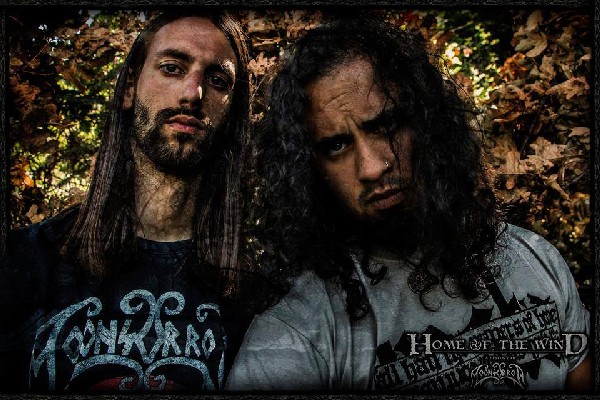
Welcome to the Moonsorrow Interviews Compilation!
Here you will find more than one hundred Moonsorrow interviews, many of which have already disappeared from where they were originally posted. Check the Index and Contact pages above and the notes in the left column for more info.

Tuesday, April 11, 2017

Inferno / March 2016


SOURCE

”Folk metal on pahinta mahdollista kuraa” – haastattelussa Moonsorrow

Padot ovat viimein auenneet, ja Moonsorrow purjehtii taivaanrantaan kevyemmässä lastissa. Jumalten ajasta ihmisen aikaan on pitkä matka.
Folkmetalli on ruma sana. Kun Moonsorrow’n basisti-laulaja Ville Sorvali ja kitaristi Mitja Harvilahti puhuvat yhtyettään inspiroivasta musiikista, he puhuvat mieluiten kansanmusiikkivaikutteista. Ihan nolojen väärinkäsitysten välttämiseksi.
– Folkmetallista on tullut jotenkin niin perverssiä, Sorvali sanoo. – Koko juttu on käsitetty täysin väärin.
– Folk metal on pahinta mahdollista kuraa sekä ulkomusiikillisesti että musiikillisesti, Harvilahti jatkaa. – Se on eskapistista, teutonista hilipatihippanmeininkiä ja larppausta. Vaatteet, kaljanjuominen ja sarvienkalistelu ovat jättäneet musiikin varjoonsa.
Sorvali lisää, että kaiken lisäksi folk metal -leima lyödään usein ihan vääriin bändeihin.
– Me ollaan bändien kesken nimetty huviksemme ”folkmetallin Big 5”, Sorvali sanoo. – Siihen kuuluvat Moonsorrow, Turisas, Ensiferum, Korpiklaani ja Finntroll. Näistä viidestä yhtyeestä folkmetallia edustaa Korpiklaani. Ei mikään muu.
Asia selvä. Moonsorrow ei soita folkmetallia. Moonsorrow soittaa pakanametallia. Piste.
On ymmärrettävää, että Moonsorrow haluaa irti mainitusta genrestä. Alan bändien määrä on lisääntynyt räjähdysmäisesti, ja sen myötä skenestä on tullut kliseinen ja korni. Liian usein yhtyeen imago on näyttävä, mutta rintapanssareiden ja kilpien takaa ei löydy mitään.
Siitä huolimatta sana ”folk” viittaa kansanperinteisiin, ja ne ovat tärkeitä myös Moonsorrow’lle, jonka muinaisajan mausteilla ryyditetty musiikki kiinnostaa varsin suurta ihmisjoukkoa ympäri maailman. Kansanperinteissä ei ole mitään kirottavaa.
– Hyviäkin folk metal -bändejä on, Harvilahti sanoo. – Ne tekevät todella monipuolista musiikkia. Harva genre pystyy yhdistelemään yhtä monia eri elementtejä. Sanoituksissa on historiaa ja fantasiaa, musiikissa metallia ja kansanmusiikkia. Kaikki tuo on nivottu yhteen houkuttelevaksi kokonaisuudeksi.
Sorvali toteaa, että puhuttiinpa sitten folkmetallista, viikinkimetallista (josta Moonsorrow haluaa myös sanoutua irti) tai pakanametallista, musiikin kulttuurinen aspekti on erittäin tärkeä.
– Ihmisiä kiinnostaa sellaisessa musiikissa se, että bändit menevät ajassa taaksepäin ja laulavat enemmän tai vähemmän todellisista historiallisista tapahtumista. Se nostaa esiin tuntemuksia, joita ihmiset ovat kokeneet jo kauan ennen sähkökitaran keksimistä.
Vaiheikas kaari
Moonsorrow alkaa olla siinä iässä, että sen uralle voi merkitä historiallisia tapahtumia. Ensimmäinen on hetki, kun Ville ja Henri Sorvali perustivat Moonsorrow’n vuonna 1995. Kahden serkuksen projektina käynnistynyt bändi teki ensimmäiset demonsa 90-luvun lopulla.
Muutaman ensimmäisen vuoden aikana Moonsorrow’sta kasvoi bändi. Rumpali Marko Tarvonen liittyi Sorvalien seuraan ennen debyyttialbumi Suden unen äänityksiä (2000). Mitja Harvilahti puolestaan ehti mukaan Voimasta ja kunniasta -albumille (2001), joka oli Moonsorrow’n toinen pitkäsoitto ja ensimmäinen levytys Spinefarmille. Kosketinsoittaja Markus Eurén liittyi bändiin samaan aikaan Harvilahden kanssa. Kolmas albumi Kivenkantaja ilmestyi 2003.
Nykyinen miehitys saatiin kokoon, kun Henri Sorvali kyllästyi keikkailuun ja jättäytyi pois kiertueilta Moonsorrow’n luovaksi harmaaksi eminenssiksi, säveltäjäksi ja tuottajaksi. Hänen tilalleen keikkakitaristiksi liittyi Janne Perttilä.
Seuraavaksi ilmestyivät ”pitkäsoiton” käsitteen uudelleen määritellyt albumi Verisäkeet (2005), V: Hävitetty (2007) ja albuminmittainen ep-levy Tulimyrsky (2008).
Helmikuussa 2011 julkaistu Varjoina kuljemme kuolleiden maassa jäi Moonsorrow’n viimeiseksi Spinefarmille tehdyksi levyksi. Seuraavana vuonna yhtye ilmoitti tehneensä diilin Century Media Recordsin kanssa. Jämerä välitilinpäätös oli neljätoista vinyylilevyä sisältänyt Heritage: 1995–2008 – The Collected Works -boksi, jonka Blood Music julkaisi vuonna 2014.
Seuraava Moonsorrow-albumi julkaistaan vasta neljä vuotta Century Median kanssa tehdyn levytyssopimuksen jälkeen. Jumalten aika ilmestyy aprillipäivänä 2016.
Tässä vaiheessa Moonsorrow on siirtynyt uudelle vuosikymmenelle. Bändi vietti viime vuonna 20-vuotisjuhlaansa. Tai jos tarkkoja ollaan, ei viettänyt.
– Me ei muistettu juhlia, Harvilahti sanoo. – Kyllä se ajatus hiukan kutkutteli takaraivossa, mutta juhlat jäivät järjestämättä. Aika menee niin nopeasti. Varsinkin viimeiset kahdeksan vuotta on mennyt ihan vilauksessa.
Sorvali naurahtaa, että aina välillä mieleen iskeytyy sellainen järisyttävä fakta, että Moonsorrow’n jäsenenä on tullut oltua reippaasti yli puolet elämästä.
– Vaikka se on pitkä aika, pystyn kyllä hahmottamaan bändin tähänastisen kaaren. Odotuksiin nähden se on ollut äärettömän tapahtumarikas matka.
Sorvali jatkaa, että pitkälle tiellä on kohdattu monia yllätyksiä, ja ne ovat olleet voittopuolisesti positiivisia.
– Ekalla lennolla Meksikoon me naureskeltiin, että eipä tullut aikoinaan demoja tehdessä mieleen, että soitetaan vielä joskus Meksikossa ja vieläpä suomenkielistä musaa. Tässä on saanut tehdä kaikenlaisia Kiinan-reissuja. Kaikesta sellaisesta voi olla vain yllättynyt ja kiitollinen.
”Karttanörtiksi” tunnustautuva Sorvali kertoo laatineensa listan maista, joissa on käynyt. Niitä on kaikkiaan 42, ja yli kolmessakymmenessä on vierailtu Moonsorrow’n kanssa.
– Rundeilla saattaa joskus nähdä jotain paikkojakin, Harvilahti huomauttaa. – Minulla kääntyy kiertueilla rytmi sellaiseksi, että menen heti keikan jälkeen nukkumaan ja herään kahdeksalta aamulla. Silloin jää aikaa katsella ympärilleen. Se reissu, joka me tehtiin Finntrollin kanssa Jenkeissä, oli mulle kuin lomamatka.
– Toisaalta Australiassa mentiin aina suoraan keikalta hotelliin, ja lento lähti heti seuraavana aamuna. Ja jos multa kysytään, Saksassa ei ole mitään muuta kuin lentokenttiä, moottoriteitä ja huoltoasemia, joista Ville ostaa BiFiä. Sitten siellä on festareita ja huonoja hotelleja. Siinä kaikki, mitä olen nähnyt Saksassa viimeksi kuluneen kymmenen vuoden aikana.
– BiFi on teollisesti survottu ja kasaan sullottu saksalainen epämakkara, Sorvali täsmentää.
Epämakkara on ihmisen ajan ruokaa, Moonsorrow jumalten ajan musiikkia.
Primitiivinen tunnelma
Varjoina kuljemme kuolleiden maassa -levyn ja Jumalten ajan välissä kului yllättävän paljon aikaa. Ville Sorvali kertoo, että Jumalten ajan säveltäminen aloitettiin jo 2012, heti edellisen levyn ilmestymistä seuranneena vuonna. Se oli kuitenkin varaslähtö. Kappaleita kyllä syntyi, mutta aikansa tahkottuaan Moonsorrow joutui myöntämään, ettei niistä tullut sellaisia kuin piti.
– Se oli sellaista tylsää ja menevää musiikkia, Harvilahti muistelee. – Siinä ei ollut sitä tarttumapintaa eikä syvyyttä, jota me kaivattiin.
Moonsorrow kaipasi jonkinlaista muutosta, mutta ei tiennyt, mihin suuntaan olisi pitänyt lähteä.
– Tietoisesti me ei yritetty tehdä mitään tietynlaista, Sorvali sanoo. – Taisi kuitenkin käydä niin, että bändi alkoi alitajuisesti tehdä uudelleen toista tai kolmatta levyään. Eihän sellainen oikein skulannut, kun niistä oli kulunut aikaa jo kymmenen vuotta.
Selitys pitkälle julkaisuvälille löytyy matkan tästä mutkasta. Kun toimimaton tavara oli hävitetty, uuteen alkuun ei päästykään ihan noin vain.
– Koskaan ennen ei ole ollut sellaista tilannetta, Harvilahti kertoo. – Me jahkattiin ja jahkattiin, mutta asiat eivät menneet eteenpäin. Äänitettiin jotain, mutta seuraavana päivänä se oli kadonnut tai muuttanut muotoaan.
– Siinä oli tosiaan pitkä blokki. Mutta kun se lopulta aukesi, musaa alkoi tulla aika sujuvasti. Siis meidän mittapuulla, Sorvali sanoo. – Sovitusvaihtoehtoja oli tietenkin aivan helvetisti, ja mehän mennään studioon aina valmiin matskun kanssa. No, Henu sai tuskailla kappaleet lopulliseen muotoonsa.
”Henu” on Moonsorrow’n primus motor Henri Sorvali. Hän sanoo uuden albumin tiedotteessa, että Jumalten ajalla on enemmän kansanmusiikkivaikutteita kuin edellisillä levyillä ja ne ovat integroituneet lujemmin kiinni yleissoundiin.
Ville Sorvali kertoo, että folkelementit nousivat pintaan siinä vaiheessa, kun kuvainnollinen pöytä puhdistettiin käyttökelvottomista kappaleista.
– Me tajuttiin, että juuri kansanmusiikkivaikutteet tekevät tästä bändistä Moonsorrow’n. Ja nyt ei puhuta mistään folk metal -vaikutteista vaan kunnon kansanmusiikista kaikkine jouhikoineen ja jodlauksineen.
”Kunnon kansanmusiikki” on juuri se elementti, jolla Moonsorrow haluaa erottua toisiaan apinoivista muinaismetalliyhtyeistä. Se ottaa mieluummin mallia 1900-luvun alussa tehdyistä perinnemusiikkiäänitteistä.
Autenttista vaikutelmaa tavoiteltiin vierailevien muusikoiden avulla. Korpiklaanin Jonne Järvelä laulaa levyllä samaanityyliin, ja hänen bändissään ennen vaikuttanut Hittavainen soittaa perinteisiä jousi- ja puhallinsoittimia. Traditionaalisen karjankutsulaulun luikauttaa Helena Haaparanta.
– Ne jutut toivat kokonaissoundiin paljon lisää, Sorvali sanoo. – Levyllä on alkukantainen tunnelma, ja se sopii Moonsorrow’lle. Jumalten aika ei ole mikään tyhmä heavy metal -levy.
Uusilla raiteilla
Ensimmäinen vaikutelma Jumalten aika -albumista on, että kaikki ei ole ihan niin kuin ennen. Levyn kappaleet ovat helpommin hahmotettavissa kuin edellisten levyjen materiaali.
Muutos on hienovarainen mutta selkeä – jopa niin selkeä, että Sorvali ja Harvilahti suostuvat myöntämään, että Jumalten aika koostuu ”biiseistä”, niin banaalilta kuin tuo sana näin eeppisessä asiayhteydessä kuulostaakin.
Harvilahti sanoo, että lähtökohtana oli entistä riffivetoisempien kappaleiden kirjoittaminen. Se tuntui hyvältä vastapainolta edellisen levyn kitaravalleille ja maalailulle.
Vaikka musiikin ääriviivat ovat selkeämmät, se on yhä massiivista ja mittavaa. Jumalten aika ei kuitenkaan katkaise kehitystä, joka alkoi Verisäkeiden aikaan.
– Verisäkeet-levyä tehdessä me oltiin saatu Henun kanssa valmiiksi pari kymmenminuuttista biisiä, Sorvali muistelee. – Alettiin sitten heittää läppää, että pitäisikö tehdä levy, jonka kaikki biisit ovat näin pitkiä. Se oli vitsi, mutta siitä se lähti. Hävitetyllä olikin sitten puolituntisia biisejä. Sitä on vaikea selittää. Ne vain syntyvät.
Jumalten ajan Suden tunti on Moonsorrow’n ensimmäinen alle kymmenminuuttinen kappale vuosiin, mutta bändi ei edelleenkään tavoittele säveltäessään radiosoiton ihannemittaa. Ja jos tavoittelisi, tuskin onnistuisi. Eikä ainakaan soisi radiossa.
– Kun on kerran hiffannut, miten tällaista musiikkia tehdään, siitä on vaikeaa palata takaisin rockbiisin peruskaavaan, Harvilahti sanoo. – Musiikista tulee ikään kun juna, joka kulkee eteenpäin. Se tekee omista rakenteistaan eeppisiä.
Vaikka junamatka on turhan moderni allegoria Moonsorrow’n kaltaisen yhtyeen uralle, Ville Sorvali ilahtuu rinnastuksesta. Hän ohjaa sen raiteelle, joka vie aina Jumalten ajan asemalle asti.
– Edellisillä levyillä musiikki oli kuin tavarajuna, joka ei koskaan pysähtynyt ja johon heitettiin jatkuvasti lisää tavaraa. Nyt junasta on purettu lastia ja se saattaa pysähdelläkin aina välillä.
Myyttien pauloissa
Jumalten ajalla on kaikkiaan viisi kappaletta, joista jokainen kertoo oman tarinansa. Halutessaan kappaleiden voi nähdä kietoutuvan yhteen löyhäksi temaattiseksi kokonaisuudeksi, mutta se ei ole välttämätöntä. Biisit seisovat myös omilla jaloillaan.
Sanoittaja Ville Sorvali kertoo, että edelliset Moonsorrow-albumit olivat niin tukevasi konseptuaalisia, ettei hän halunnut kirjoittaa Jumalten ajasta sellaista. Mutta vaikka monumentaalisuuden aiheuttama ähky painoi lyyrikkoa, myös Jumalten aika on tarkoin harkittu kokonaisuus. Teeman muotoutuminen kesti kauan, mutta lopulta ydinajatus selkeni.
– Jumalten aikakaudella jumalat loivat ihmiset. Sitten ihmiset oppivat puhumaan, laulamaan ja lopulta kirjoittamaan. He alkoivat tehdä tarinaa siitä, miten heidät on luotu. Lopulta ihmiset alkoivat ajatella, että olivat itse asiassa luoneet jumalat. Kun ihminen jätti jumalat taakseen ja alkoi hallita maailmaa, syntyi ahneutta ja eripuraa.
Jumalten aika alkaa levyn nimikappaleella ja päättyy kuusitoistaminuuttiseen teokseen nimeltä Ihmisen aika (Kumarrus pimeään). Ainakin paperilla kokonaisuus näyttää kertovan maallistumisesta.
– Naulan kantaan. Niin jumalten ja ihmisen aika nivoutuvat yhteen, Sorvali sanoo.
Hän kertoo pureutuneensa sanoituksissa erilaisiin myytteihin ja tehneensä tulkintoja niiden merkityksistä.
– Ensimmäisen ja viimeisen kappaleen välissä käsitellään taruja, joilla muinaisaikojen ihmiset selittivät esimerkiksi luonnonilmiöitä. Levyllä kerrotaan myös siitä, miten ihmiset etsivät tietoa ennen kuin tieteellinen lähestymistapa on keksitty.
– Kalevalastakin nappasin levylle yhden tarinan. Kun pääsin peruskoulun Kalevala-traumasta eroon, huomasin sen olevan helvetin mielenkiintoinen opus. Useimmissa on kuitenkin pohjalla yleinen skandinaavinen mytologia. Olen lukenut sekä proosa- että runomuotoisen Eddan. Runo-Eddasta en kyllä tajunnut hevonhelvettiä.
Muinaisuskon ajasta ammentaminen voi olla pelkkää imagon rakentamista tai sitten jotakin syvällisempää. Millainen merkitys esikristillisen ajan hengenelämällä on Moonsorrow’n jäsenille?
– Maallisia ihmisiähän me ollaan, mutta ne asiat kiinnostavat ja ohjailevat meitä. Moonsorrow’n musiikin ydinajatus on vanhan kansan viisaus ja kunnioitus luontoa kohtaan, Sorvali sanoo.
– En ole uskonnollinen ihminen vaan ateisti, mutta minullakin on pyhiä arvoja, Harvilahti jatkaa. – Luonnon ja elämän kunnioittaminen ovat sellaisia, ja ne ovat pyhiä arvoja myös pakanauskossa.
Se riittää, jos tarkoitus ei ole pelata rooleilla. On elettävä ajan ehdoilla, ja aika on muuttanut asioita.
– Ennen ihmiset olivat luonnon armoilla, Sorvali sanoo. – Jos oli helvetin kylmä, mentiin sisälle, sytytettiin tuli kaikkiin pesiin ja vedettiin turkista päälle. Jos oli pimeä, sytytettiin soihdut. Pihalla oli karjaa, josta sai maitoa ja lihaa, ja maassa kasvoi juureksia.
– Nykyihminen on niin vieraantunut tuollaisesta ajattelusta. Lähdepä tästä metsästämään jotakin, Sorvali sanoo ja viittaa ikkunasta näkyvään Helsingin Pasilaan. – Citykanin saatat saada ammuttua, mutta siinäpä se.
Juttu on julkaistu Infernon numerossa 3/2016.

HeavyMusic.ru / May 2016 (HOTW)


SOURCE


What would you say if you hear about a project of a documentary for a band directed by TWO people which is based on the biography created by ONE person? Home of the Wind. A History of Moonsorrow is an ambitious project of two dedicated Moonsorrow fans, Leo Aragón and Abel ‘Grilo’ do Demo; HeavyMusic had a talk with Abel about working on the documentary, challenging moments and personal dreams.
        

          HeavyMusic: Please, tell us a bit about your project. How and when did it start to take shape?
          
          Abel: February 16, 2015. I was hanging out with Leo in Camden, London, it was the first time we met in person after a few years of online contact and he just said, what do you think about turning your biography into a documentary? I was so shocked I thought it was impossible, but… here we are!
          
          HM: Could you please describe your daily work on the project - who does what?
          
          Leo works, I watch and agree! As the ancient Spanish tradition dictates. More seriously, he does all of the technical stuff: all videos and photos are done by him. On the other hand, all the longer texts are written by me, and I’m also mostly the one researching whatever topic we need at a given time. Everything else, we divide every week or two weeks, depending on who has more time or the best contact. There are lots of things to do and prepare. For example, now it is public information that we filmed the concerts in Madrid and London, but preparing those recordings was long as it involved many people, two full filming crews plus the band management. Another big thing is the different DVD editions that will be made and the perks that will be offered during the crowdfunding campaign… We have people helping us, a lot of them actually, each on their field, but we are still the ones making the decisions and coordinating everything the best we can. So there’s always something going on to take care of. Like answering interviews. I’m in charge of that as well.
          
          HM: How did the band react to your suggestion to film a documentary and were they supportive from the start?
          
          At first they were so confused! A docuwhat? Like, how come? And what about? I think in the first moment the five of them had five different opinions on the matter, but as we started to be more clear about our vision and what we wanted it to be like, they started to get more excited. Since then, yes, they’ve been very supportive and offered us very significant help in crucial moments. Wait for the crowdfunding and you’ll partially see what I’m talking about… Right now, my lips are sealed!
          

          HM: The video teasers we have already seen do create a feeling of suspense and, in some sense, of monumentality. Did you guys do anything similar (filming or writing a script) in the past before you started working on this project?
          
          I personally did not, but Leo is all the time filming interviews. He does the videos all by himself and achieves TV quality. Search for ‘The Breathless Sleep’ on Youtube and you’ll see. However the documentary won’t be the same, it will have a cinematic approach. He’s been experimenting a lot with that as well lately. I myself enjoy writing quite a lot, so I’m really excited about making a documentary script. By the way, I’m glad you get that feeling from the videos! Suspense and monumentality, I like that description.
          
          HM: 'Home of the Wind' - a heroic name for a film about the band who surely have this heroic vibe in their music. How did you come up with such a name?
          
          It has three sides. It will be shot in Finland, in the locations that are relevant to Moonsorrow’s history. So that is the home. Paganism and nature are the foundations of the band’s concept, so that’s the wind. And finally, it links to the song “Tuulen koti, aaltojen koti” (eng. - Home of the wind, home of the waves), which has this calm, home-like feeling—even wind and waves sound effects. By the way, you’ll find waves in some HOTW related material; just keep your eyes open!
          
          HM: From your point of view, what makes your documentary stand apart from similar projects?
          
          The cinematic approach, and how the content will be treated. It will have a leitmotiv, a beginning and an end, and a particular atmosphere. Concerning the script, I personally like a lot the History of Iron Maiden documentary series (the one that started in the DVD The Early Days), because of the way the interviews are conducted and how the whole story is told. The visual side is totally missing in that one, but the story flows very well. Besides, Moonsorrow has a very important philosophical content, or spiritual, or whatever you want to call it, so that is definitely something that will be featured too. Add up the story, the concept and the cinematography, and it makes a pretty nice film, don’t you think?
        

          HM: You are starting a crowdfunding campaign in May but you have already gathered some field help from dedicated Moonsorrow fans (and I find this fact to be pretty awesome!). Did you expect such a feedback and supportive attitude or have you actually been relying on you alone from the start?
          
          Yep, that’s right, the funding starts in May but the crowd started long ago! I actually was expecting some collaboration, yes. I expected some people would want to contribute, and I expected it because I totally would if it was someone else’s project, and I know there are many fans like me. The first person who joined us was someone you probably know, and here I’m revealing this for the first time in public: our artwork is made by the incredible Belgian artist Kris Verwimp, who also made all those Marduks and Absus and Suidakras and Arkonas among others, as well as the very praised Tulimyrsky. After him, many more joined us: two community managers (at different periods), several filmmakers, a few people who will make subtitles, someone who’s helping us with formatting the pages of a thing with pages we’re preparing (hint hint hint), photographers, a very nice journalist from Moscow, two composers, and I’m probably forgetting about some more people. This isn’t a team any more, this is already a legion. Or as the compound word says: a crowd. ;)
          
          HM: What are/were the challenging points in your work which were not foreseen beforehand?
          
          At first we intended to go and film in November 2015, I’m writing this in April 2016 and the crowdfunding hasn’t even started yet… so imagine how many things happened. There weren’t many real problems, but some aspects were very complex and, as you said, challenging. Firstly, we have our jobs and obligations, which sometimes slow us down more than we would like. Secondly, Moonsorrow is after all a part of the music business, which not because of being music is less of a business, and there are many people around who have the totally legitimate right to have some conditions as well. For example, copyrights belong to the labels. So, back to your question, there weren’t big surprises concerning challenges—we mostly had in mind most aspects we would have to face in general terms, and then we had to deal with the smaller, sometimes previously unknown details that came with them.
          

          HM: Without doubts this documentary is a project both ambitious and complex. What do you dream to achieve with it on a personal level?
          
          I’m already having the fun of my life and I’m doing something bigger than I ever thought I would. In addition, I’m doing it about one of my top favourite topics ever. In addition, I’m making a lot of friends and meeting super interesting people. In addition, I have the honour of being involved in, deciding about and eventually having my name on a product that is going to be awesome, thanks to a great team I'm also a part of. In addition, I’m going to have one of the coolest editions of a Moonsorrow-related item ever (hint after hint!), actually prepared by my friends and me. In addition, I will organize and participate in an awesome event (hints never end). In addition… need I continue adding things?
          
          HM: Do you imagine the biography you have been working on being published someday?
          
          It’s a pretty pleasant day today in Budapest, how’s spring in Moscow? :)
          
          HM: Since all this is obviously about Moonsorrow let me ask this one: which one MS song would you like to be played at your wedding and another one - at your funeral?
          
          For my funeral, whenever I find out I died I will make a small poll among my mourners so they can choose their preferred one. And if I ever get married, I’m totally hiring the band to play a full set.
          
          HM: Thank you!
          
          ¡Las que tú tienes! Thanks for your support!
          
          HeavyMusic would like to thank Home of the Wind team for the interview!
          
          Follow Home of the Wind. A History of Moonsorrow on Facebook
          
          Interviewer – Olga Degteva
          Photos - Home of the Wind. A History of Moonsorrow

Inferno / March 2016 (HOTW)


SOURCE


Moonsorrow-dokkaria rahoitetaan joukolla, ensimmäinen tiiserivideo verkossa


Kuten jo viime kesänä kerroimme, Moonsorrow’sta on tekeillä dokumenttielokuva. Ihka uutta tietoa on, että Abel ”Grilo” do Demon ja Leo Aragónin masinoima Home of the Wind. A History of Moonsorrow toteutetaan joukkorahoituskampanjan avulla.
Do Demo ja Aragón kertoivat Infernolle, että kampanjassa on kyse sekä hankkeen rahoittamisesta että fanien ottamisesta mukaan projektiin.
– Moni asia riippuu siitä, saammeko kokoon tarvitsemamme summan. Mutta siinä on myös joukko-ulottuvuus, jonka kautta projektiin voi löytää uusia ideoita ja yhteistyön muotoja.
Moonsorrow on antanut dokumentintekijöiden käyttöön haastatteluja ja monenlaista muutakin materiaalia. Myös joukkorahoituskampanjan houkuttimet tulevat yhtyeeltä.
– Bändi on lahjoittanut kampanjapalkinnoiksi harvinaisuuksia. Suunnitteilla on myös erilaisia tapahtumia ja yllätyksiä, mutta niistä lisää myöhemmin.
Joukkorahoituskampanja käynnistyy toukokuun alussa ja kestää kuukauden. Mikäli kaikki etenee suunnitelmien mukaan, do Demo ja Aragón tulevat kesällä Suomeen kuvaamaan. Home of the Wind. A History of Moonsorrow’n on määrä valmistua vuoden loppuun mennessä.
Aiheesta kerrotaan lisää 18.3. ilmestyvän painetun Infernon laajassa Moonsorrow-jutussa.

Folkmetal.pl / May 2016 (HOTW)


SOURCE


Home of the Wind – wywiad


Home of the Wind to grupa fanów fińskiego zespołu Moonsorrow. Ich celem jest wydanie dokumentu opowiadającego o historii tej kultowej już grupy. Postanowiliśmy zadać im kilka pytań.
Jak narodził się pomysł na ten projekt Home of the Wind?
Home of the Wind: Wszystko zaczęło się od Leo, kiedy założył Jörmungandr Media. Zajmował się on tworzeniem filmów, lecz zaczął poważnie myśleć nad naprawdę dużym projektem, w którym połączy swoje umiejętności techniczne z miłością do muzyki metalowej. Miłośnik Moonsorrow dowiedział się o mnie i postanowił napisać do Unofficial Moonsorrow Biography (strona jest trochę przestarzała, ale wkrótce zostanie ona całkowicie odnowiona) okazało się, że Leo ma ogromną wiedzę na temat tego zespołu. Zaczęliśmy więc zbierać coraz więcej informacji o Moonsorrow, dowiedziałem się wiele na temat montowania filmów; wydawało nam się, że to będzie dobry pomysł, kiedy postanowimy współpracować. Projekt był samorealizowany, ponieważ nie chcemy za jego pośrednictwem zarabiać pieniędzy – wszystkie nasze fundusze wydaliśmy na projekt, i nie mamy zamiaru go potem sprzedawać. Marketing nie jest naszą domeną – wolimy trzymać się tego, co uważamy za słuszne i co robimy dobrze!
Skąd zamiłowanie akurat do Moonsorrow?
HotW: Więc… czy można wytłumaczyć, na czym polega miłość? Postaram się być obiektywny w subiektywności, o ile to ma jakiś sens. Moonsorrow jest bardzo unikatowy i rozpoznawalny na tle innych zespołów. Najbardziej w ich muzyce podobają mi się melodie, zwłaszcza te, które są grane za pomocą klawiszy i chórów; są one zawsze w określonym miejscu i w dokładnej ilości, nie za dużo, ale też nie za mało. Ich piosenki są idealne w definicji rozwoju. Inne zespoły również mają piękne melodie, ale często wykorzystują je bardzo niezdarnie, albo wykorzystują je bardzo dokładnie i starannie, lecz wtedy melodie są nudne. Oczywiście, nie tyczy się to wszystkich zespołów, są to tylko przykłady. Ale to się nigdy nie dzieje z Moonsorrow. Tak więc – połączenie tych dwóch aspektów może być odpowiedzią na pytanie, dlaczego kocham akurat Moonsorrow.
Od jak dawna macie zamiłowanie do Moonsorrow?
HotW: Od grudnia 2006 roku. Pobrałem album V: Hävitetty (nielegalnie!) i nie mogłem uwierzyć w to, co wtedy usłyszałem. Muszę podkreślić, że w tym okresie nie słuchałem ekstremalnej odmiany metalu, nie wiedziałem również, czym jest muzyka paganmetalowa. Ściągnąłem wszystkie albumy i zakochałem się w utworze Raunioilla. Jak zapewne rozumiesz, było to wtedy dla mnie gigantyczne odkrycie.
Czy jesteście zadowoleni, z waszej obecnej sytuacji w kampanii crowdfundingu?
HotW: Słuchaj, uzbieraliśmy ponad siedem tysięcy euro w niecałe piętnaście godzin, było nam naprawdę trudno w to uwierzyć! Więc mogę powiedzieć, że tak – jesteśmy bardzo zadowoleni, hehe. W momencie, kiedy piszę ten tekst, mamy 66% funduszy potrzebnych do zrealizowania projektu; to wszystko dzięki wspaniałym stu dziewięćdziesięciu ośmiu osobom. Do końca kampanii crowdfundingu zostało piętnaście dni, czyli jeszcze drugie tyle, ile mieliśmy. 66% kwoty w połowie „naszego czasu” brzmi bardzo optymistycznie, prawda? Jesteśmy praktycznie pewni, że uda nam się zrealizować projekt, więc kolejnym celem naszej kampanii jest dotarcie do wydawnictwa, które wytworzy skórzane wydanie, zawierające całą biografię – nie tylko to, co znajduje się w sieci, ale rozszerzoną wersję, obejmującą wszystko do 2014 roku, a prawdopodobnie nawet więcej.
Czy macie ulubione albumy?
HotW: Jednego słucham w każdej chwili! A tak poważnie, może Kivenkantaja jest tym jedynym. Ale kiedy jestem podczas słuchania Voimasta ja kunniasta, Verisäkeet albo Jumalten aika, czuję się, jakbym cały czas słuchał tego samego. Może trochę mniej lubię Suden Uni niż pozostałe krążki, mimo że Tuulen koti, aaltojen koti (stąd tytuł naszego filmu) i 1065: Aika to absolutnie genialne piosenki.
Czy są utwory, z którymi wiążecie dobre wspomnienia?
HotW: Bardzo mi przykro, wiem, że to bardzo romantycznie zabrzmi, kiedy powiem, że przez niektóre piosenki wracam pamięcią do miłych wspomnień, ale to nie moja sprawa. Te „dobre wspomnienia” nie odnoszą się do poszczególnych utworów, ale tak czy siak, są takie wspominki. Dla przykładu; moja (pierwsza) podróż po ukraińskich górach w sierpniu 2012 roku była prawdopodobnie najlepszą wycieczką w moim życiu, nie mówiłbym tak, gdyby nie grało tam Moonsorrow. Zacząłem nawet oblewać sobie nawet twarz krwią, coby w ten sposób okazać szacunek dla tego zespołu, hehe. Recepjonista hotelu nie spodziewał się, że po wejściu do pokoju o 4 rano, zobaczy uśmiechniętego człowieka pokrytego krwią, który mówił po rosyjsku strasznym akcentem. Na mojej twarzy widniał czysty terror… Śmieszne wspomnienia! (ale pewnie nie tak śmieszne dla recepcjonisty).

Czy macie jakieś plany, kiedy skończycie ten projekt?
HotW: Nie w tej chwili, do sfinalizowania naszego projektu została jeszcze długa droga. Po nakręceniu materiału będziemy musieli go edytować, zajmie nam to kilka miesięcy; potem trzeba zrobić fizyczne wydanie i wysłać je. Chcielibyśmy urządzić jakąś imprezę z okazji premiery filmu, może nawet z udziałem samego Moonsorrow, ale jest to bardzo skomplikowane, ponieważ osoby odpowiedzialne za projekt mieszkają w różnych krajach… Zobaczymy, co z tego wyjdzie. Na chwilę obecną mamy jeden główny cel: zrobić niesamowity film dokumentalny!
Dziękuję za wywiad, powodzenia w przyszłości!
Wy też jeszcze możecie wspomóc Home of the Wind w kampanii crowdfundingu, wpłacając dowolną kwotę tutaj.
Liczymy na wasze wsparcie!


---------


ENGLISH VERSION


  1. How did the idea for the project Home of the Wind come up?

It was Leo, founder of Jörmungandr Media, who brought it up. He has been making videos and working as a designer for a while, but he wished to embark on a big project that would combine all his technical skills with his love for metal music. A Moonsorrow lover himself, he knew about me having written the Unofficial Moonsorrow Biography (http://moonsorrowbio-en.blogspot.com, now a bit outdated, but soon to be renovated completely) and having a deep knowledge about the band. I have researched and read a lot about Moonsorrow, and he has astounding skills for making videos, so this seemed like a decent team for the job, right? It’s a bit of a self-realization project, as we don’t intend to make money out of it—all the funds will be invested in the project, and it won’t be sold afterwards. Marketing isn’t our area—we better stick to what we do right!

  1. Why exactly do you love Moonsorrow?

Well… can love be explained? Haha! But I’ll try to be objective in subjectivity, if that makes any sense. Moonsorrow is very unique and recognizable, which can be applied to other bands, but not many. What I like most in their music is their melodies, especially in keyboards and choirs; they’re always in the precise place, in the precise amount. There is a lot of repetition in every song, but repetition reaches exactly the point it has to reach, and then it changes, and then it comes back with a variation. Their songs are the perfect definition of development. Other bands may have beautiful melodies, but may arrange them in a clumsy way; or are able to develop in a right way but their melodies are dull. Of course not everyone else does this, they are just examples. But this never happens with Moonsorrow. So the combination of these two aspects may be what makes Moonsorrow special for me, if I have to explain in in a coldly reasonable way.

  1. How long do you like Moonsorrow?

Since December 2006. I downloaded the promo of V: Hävitetty (illegally!) and I couldn’t believe what I was hearing. I must point out as well that at that time I didn’t listen to any extreme metal at all, and I didn’t even know about “pagan metal” being a thing. I downloaded everything else and “Raunioilla” definitely made me fall in love. As you probably understand, it was a pretty big discovery for me…

  1. Are you satisfied with our current financial situation in the crowdfunding campaign?

Man, we raised over €7,000 in about 15 hours, we could hardly believe it! So I can say yes, we are acceptably happy, hehe. Right now, while I’m writing these lines, we are at 66% of our goal thanks to 198 wonderful backers, and 15 days are left, so we are exactly at the half of our campaign. 66% funded in 50% of the time sounds about right, doesn’t it? We are practically sure already that the documentary will be made, so the next goal of the campaign is to reach the minimum for making a leather digibook edition that will contain the full biography—not just what’s online, but an extended version, covering up to 2014 at least, probably more.

  1. Do you have a favorite album?

The one I’m listening to in each moment! More seriously, maybe Kivenkantaja could be the one. But when I’m in the middle of Voimasta ja kunniasta or of Verisäkeet or Jumalten aika, I don’t feel at all like changing the album… Maybe I like Suden uni as a whole a bit less than the others, although “Tuulen koti, aaltojen koti” (where we took the title of the documentary from) and “1065: Aika” are absolutely brilliant songs.

  1. Are there any songs that involve the good memories?

I’m very sorry, I know it would be very romantic to say that certain songs remind me of special memories, but that’s not my case. My, let’s say, “good Moonsorrow memories” aren’t related to particular songs, but they do exist anyway. For example, my (first) trip to the Ukrainian mountains in August 2012 was probably the best in my life, and I wouldn’t have gone at all if Moonsorrow wasn’t playing there. I even got to wear their blood on my face, which was cool in its own fanboyish way, hehe. Apparently it wasn’t so expectable for the hotel receptionist to have a guest arriving at 4 AM, alone and covered in blood, smiling and politely speaking very broken Russian. The poor guy’s face was pure terror… Funny memories! (or maybe not so funny for him)

  1. Do you have any plans, when you finish this project?

Not for the time being, as the finalization of the current one is still far ahead. After filming, we will have to edit it, which will take months; once it’s done, we will have to manufacture all the physical items and send them out. We would also like to organize a cool event for the premiere, maybe even involving some band members, but this is very complicated because it involves a lot of people who live in different countries… We will see. For the time being, we focus on the main point: making an awesome documentary movie!


Thanks for the answers to questions :)

And Justice For Art / June 2016 (HOTW)


SOURCE

Thursday, June 2, 2016

WORLD EXCLUSIVE: Unveiling artwork for the poster of the documentary "Home Of The Wind. A History Of Moonsorrow."

Independent film-making proposes many challenges—including finding proper financing to make your ideas a reality. Young filmmakers, Leo Aragon and Abel Grilo Do Demo, know this and are currently embarked in a titanic crowd-funding campaign via Indiegogo to raise the funds they need to finish their epic documentary "Home Of The Wind. A History Of Moonsorrow." 

As the title indicates, this film will be a recount of the career of Pagan Metal heroes, Moonsorrow. The filmmakers have the complete support of the Finnish band, who are helping them in their efforts to raise funds for the documentary. So far, their combined efforts have raised 70% of the campaign's goal.
The film's official poster was painted by seasoned illustrator, Kris Verwimp, who is well-known for his epic album covers for bands like Absu, Marduk, Suidakra, among others. He previously collaborated with Moonsorrow on the creation of the cover for the EP, "Tulimyrsky." In the following interview Verwimp talks about the creation of the poster for the documentary. His impressive, evocative Nordic-inspired landscape can be seen for the first time below in its original form—without any lettering or band logo. 

Kris, you have been painting artwork for metal albums for over 20 years. How did you start? Was it your own initiative, and did you decide to do it continuously already at that time?
Kris Verwimp: Actually, it all started way back in 1993 when I was trying to find a publisher for my Odoric comic book. At a local convention, the owner of a small underground label called “Midian Creations”, asked me if I would be interested in painting an LP cover for Ancient Rites’ “The Diabolic Serenades”. I had always been into Metal, but I never imagined I would ever get the chance to actually design an album cover. So I jumped at the opportunity and tried to create my best work ever. 
I didn’t think I would ever get such a chance again, but soon after the Ancient Rites album was released I got a call from Osmose Productions from France. A while later I was painting CD covers for Marduk’s "Opus Nocturne" and Absu’s "The Sun Of Tiphareth” along with numerous T-shirt designs for bands like Immortal, Enslaved, Angelcorpse, etc…
It was never a conscious decision. In the following years I just kept getting artwork requests from great bands. The music is always my number one source of inspiration. So when the music is great, it’s not hard to find the motivation. 
You painted the artwork for Moonsorrow's Tulimyrsky almost nine years ago, and it became a popular painting, that was even made into a huge poster in 2014. What are your memories about that one, concerning inspiration and the painting process itself?

Kris Verwimp: Well, I must start by saying that I was a fan of Moonsorrow ever since their first album “Suden Uni”. It was a blind purchase at the time, but I loved it immediately and bought all their releases ever since. I’ve spent many hours painting while listening to their music. To my surprise, one day I got a mail with the message that it was my turn to create an artwork for them! They presented the idea to do a very wide artwork. In fact, it was the same amount of work as 5 regular covers. The front cover would be this calm scene of only water and mountains, with only a hint of what was really going on. It was such an inspiring idea that it wasn’t difficult for me to come up with several rough compositions to choose from. The painting process itself took quite a while, but I remember enjoying it a lot. I love epic historical scenes, so this was a great opportunity. 

What was your reaction when you got a request about a Moonsorrow documentary—which needed pretty much the exact opposite of an epic historical action scene?

Kris Verwimp: Actually, I thought it was a great idea! I believe that nature can also be pretty epic and I think that the concept fits the title very well. There’s also the fact that the illustration has to serve as a backdrop for the logo. So it was something a bit different than usual and it required a different approach. I thought it would be a nice challenge.

What inspired you to paint this particular image? Were you given a clear description, just a few guidelines, or did you have complete freedom?

Kris Verwimp: I was given the title and some guidelines. It had to be a nature scene in a DVD size format and there should be enough room for the logo. Everything else was up to my own imagination. The title itself creates a certain expectation, so I wanted to go for a sweeping landscape with a lot of open space and a lot of sky to convey the concept of the wind. The warm colors were meant to add a sense of belonging. The animals were painted to make the composition a bit more dynamic. The main source of inspiration was of course Moonsorrow’s epic music itself!     
What technique did you use in the "Home of the Wind" artwork, and why did you choose it?

Kris Verwimp: I used acrylics and water mixable oils on paper because it’s my favorite technique at the moment. In the past I mainly used gouache, but then I started experimenting with airbrush and other techniques. After a while I stopped using airbrush and switched to acrylics. It’s a constant evolution. I never went to an art school, so I’m discovering all those techniques on my own. I think it’s part of what keeps it interesting for me. It’s like a journey… 

Now you've just made a painting for a film, even if music-related. Have you made artwork for films before? Is it different for you, and if so, in what ways?

Kris Verwimp: A few years ago I also worked on “Death of a Shadow”, a Belgian short movie directed by Tom Van Avermaet. I created concept art and credits illustrations. The movie featured actor Matthias Schoenaerts and it was even nominated for the Oscars in 2013!

The big difference with painting album covers is that you get to see your drawings turned into reality at some point. Which is very cool of course, even if the final result could look a bit different.  

I’ve always been very interested in movies. After all, the reason why I started drawing in the first place was because of my love for movies such as Conan The Barbarian, Excalibur, Mad Max, Dune, etc.. In those days a movie could only be experienced at the cinema. So the only way for me to recreate the experience at home was by trying to draw what I had seen. It was also the reason why I started drawing my own comics. A comic is actually very similar to a movie storyboard and you get to be writer, director, photographer, costume designer, etc… And the best thing is that the budget is only limited by your imagination. 
Those interested in supporting the film can check "Home Of The Wind" official Indiegogo campaign and the official Facebook. The campaign offers all kind of perks, from digital copies of the documentary to rare band-signed items.

Heavy Music Artwork / June 2016 (HOTW)


SOURCE


The Making Of The Poster For 'Home Of The Wind: A History Of Moonsorrow'


For young filmmakers Leo Aragón and Abel Grilo Do Demo, bringing to life the upcoming documentary "Home Of The Wind: A History Of Moonsorrow" has been a true epic journey—as epic as the music of the band they're focusing on: Finland's Moonsorrow. They started working on the project more than a year ago, without knowing how they were going to finance it. There was not even certainty about the band's potential support. Today, that's changed. They count with the Pagan Metal group's blessing and have embarked in a titanic crowd-funding campaign via Indiegogo to raise the funds they need. With only a few days to go before the end of the campaign they have already raised 70% of the campaign's goal.
The film's official poster was painted by legendary illustrator, Kris Verwimp, who has crafted many album covers for bands like Absu, Marduk, Suidakra, among others. He even previously collaborated with Moonsorrow on the cover for the EP, "Tulimyrsky." In the following interview, scriptwriter, Grilo Do Demo and Verwimp talk about the creation of the poster for the documentary.


HMA: Grilo, you are the scriptwriter of "Home of the Wind" and also author of the Unofficial Moonsorrow Biography. How did you start working with Kris Verwimp on this project and why did you choose him?
Grilo do Demo: I am a fanboy of Kris, I love his art since I realized several awesome covers were painted by the same person, and then I looked at everything he had on his website. I blatantly stole one of his Thyrfing drawings to use as a banner in my blog many years ago. One or two years after that I bought his art book and comic, and later I decided to go the more legal way and ask him for permission to use his draft for Tulimyrsky as a banner in the Unofficial Moonsorrow Biography. I showed his work to Leo and loved it too, so the question if we had chosen someone else would rather be: why on earth did you not choose Kris Verwimp?!? At first we thought he wouldn't be interested, we just tried because we had nothing to lose, but everything went very smoothly since the first moment. He accepted instantly and started working very quickly.
HMA: What was the initial idea for the poster artwork?
Grilo do Demo: It reflects the concept behind the title. "Home of the Wind, Home of the Waves" is the translation of "Tuulen koti, aaltojen koti," the title of one of the songs in Moonsorrow's debut album. In addition to this reference, in our case, home represents Finland, where the film will be shot; wind represents nature. As for the image, we wanted a natural landscape reflecting a calm atmosphere, with a central figure in the right side. That's pretty much all we told Kris. Everything else was his idea. I personally love the presence of the waves—it's kind of obvious in a way when you know the origin, but still a delightful detail. I also like the illuminated tree in the left, although I don't know what it represents, if anything at all. My flat mate even compared it to the burning bush in the Bible... Who knows!
Kris Verwimp: I was given the title and some guidelines. It had to be a nature scene in a DVD size format and there should be enough room for the logo. Everything else was up to my own imagination. The title itself creates a certain expectation, so I wanted to go for a sweeping landscape with a lot of open space and a lot of sky to convey the concept of the wind. The warm colors were meant to add a sense of belonging. The animals were painted to make the composition a bit more dynamic. The main source of inspiration was of course Moonsorrow’s epic music itself!
HMA: Kris... What was your reaction towards this particular project?
Kris Verwimp: I thought it was a great idea! I believe that nature can also be pretty epic and I think that the concept fits the title very well. So it was something a bit different than usual and it required a different approach.
HMA: What was your reaction to see the process and the final result?
Grilo do Demo: He sent us the first unfinished version less than a month after accepting the task, and we thought, "is this really unfinished?," because, sure, some details were missing here and there, but it really looked like a 99% ready job in very little time. But then he worked a lot on the clouds and the overall light, which gave it a completely new dimension. It's a wonderful piece of work, and I'm very honored to have had master Kris Verwimp paint for our humble project. I've had it as my PC's desktop background for a while and updating it with every new version, haha! We just love it, it perfectly captures the atmosphere we want the documentary to have.
HMA: Thanks for your time guys. Please, offer your last words to our readers, especially about your current Indiegogo campaign.
Grilo do Demo: Thanks a lot for the opportunity you’re giving us! Moonsorrow fans: thanks for all your support; I really hope we can reach the minimum goal during the last days of the campaign! You can still support us via Indiegogo getting any of the available perks and also with an open donation. It’s been a year of hard work, the decisive moment is now! Here’s our campaign: igg.me/at/homeofthewind.
www.facebook.com/grilododemo

Hellpress / April 2016 (HOTW)

Entrevista sobre el documental Home of the Wind.

SOURCE

A estas alturas cualquier aficionado y seguidor del Pagan Metal conoce a los fineses MOONSORROW que tras más de 20 años deleitándonos con varias obras maestras se han convertido en una referencia absoluta del género. Lo que no saben muchos es que un español y un argentino están detrás de lo que será su primer documental biográfico, entrevistamos a uno de sus creadores, Abel Grilo “do Demo”, un gallego aficando en Budapest para que nos cuente más sobre este ambicioso y apasionante proyecto.


¿Qué tal, Abel? Para empezar ¿podrías contarnos como surgió la idea de hacer un documental de MOONSORROW?
En febrero del año pasado fui a Inglaterra, entre otras cosas para ver un concierto de MOONSORROW en York, y paré un día en Londres, que es donde vive Leo actualmente. Esa noche salimos a tomar unas cañas y en una de estas me dijo: “Oye, ¿qué te parecería hacer un documental de MOONSORROW a partir de tu biografía?” Me llevó varias semanas de terapia intensiva recuperarme del shock. Leo estudió comunicación audiovisual, además tiene un talento enorme para hacer vídeos y un estilo muy personal. Le apetecía hacer un proyecto grande, y esto es lo que se le ocurrió.
¿En que estado se encuentra el documental actualmente?
Gaseoso. Más en serio, la biografía de MOONSORROW (www.MOONSORROWbio-es.blogspot.com.es), que es la base, está hecha, concretamente hasta el año 2014 (publicada sólo hasta 2008), y como está pasando tanto tiempo, probablemente escriba el 2015 también. Estamos en proceso de convertir ese material en un guión decente. Eso en lo que corresponde al contenido, digamos, historiográfico del documental. En el apartado técnico, hemos conseguido reunir un pequeño equipo: además de nosotros dos, están también otras dos personas del mundillo audiovisual que nos echarán una mano con la fotografía y posteriormente con el color. Además, contamos con tres compositores (uno de ellos, el propio Henri Sorvali) para la banda sonora, que hemos decidido que será completamente nueva, y gente que se ocupa de otras tareas, como las redes sociales, contactos de prensa, subtítulos, etc. Podemos decir, como en una tira de Calvin y Hobbes: “ya casi está, sólo falta hacerlo”. Siguen quedando cabos que atar antes de coger el avión y plantarnos en Finlandia, pero esos cabos son cada vez menos y, si todo va bien, viajaremos ya este verano.
La siguiente pregunta es casi obligada, ¿cuándo tenéis planeada la fecha de lanzamiento?
La fecha que manejamos prefiero no decirla con demasiada exactitud, porque visto lo visto, se acabará retrasando por cualquier imprevisto… De imprevistos sabemos mucho ya. Supongo que eso es bueno, porque si el proyecto sigue adelante, significa que es lo bastante fuerte. Pero vamos, volviendo a tu pregunta, muy mal se tiene que dar todo para que en menos de un año no lo hayamos estrenado.
Tengo entendido que en mayo hareis una campaña de crowdfunding para financiar el proyecto ¿podrías darnos más detalles y si como es común en este tipo de eventos habrá alguna recompensa por participar?
¡Por supuesto que habrá recompensas! La más obvia, el DVD. Además tenemos rarezas cedidas por la propia banda, y luego cosas como contenido digital, participación más directa en el documental… Todo esto se confirmará más detalladamente, y espero que podamos confirmar también unas cositas más en las que estamos trabajando. Pero lo dicho: lo básico será el DVD y las recompensas digitales.
Por lo demás, tenemos planeado que la campaña dure exactamente un mes, que sea del tipo “todo o nada” y, precisamente por este motivo, que el objetivo sea lo más bajo posible dentro del mínimo que necesitamos. Si conseguimos más, bienvenido sea. Todo será invertido en el documental, recompensas o lo que sea; no nos interesa ganar dinero con esto (y aunque quisiéramos, dudo que lo fuéramos a ganar).
¿Fue fácil conseguir que los miembros de MOONSORROW se mostraran receptivos para aparecer ante una cámara o tuvisteis que insistir y hacerles ver que ibais en serio? Supongo que ellos tuvieron que flipar cuando se enteraron que un español y un argentino querían hacer un documental acerca del grupo.
(Risas) A esta pregunta contestó Ville hace poco en otra entrevista, y me disculparás la falta de modestia, pero su respuesta me hizo mucha gracia, dijo: “la verdad es que no nos sorprendimos, nos sorprendimos cuando uno de ellos se puso en contacto con nosotros hace años con una biografía, pero ahora que lo conocemos, ya no nos sorprende”. Cuando se lo propusimos, las primeras respuestas fueron un poco dubitativas, pero cuando les explicamos el proyecto con detenimiento y les mostramos que era un tipo de filme muy distinto al que probablemente, llegado el momento, harían ellos de manera oficial, empezó a gustarles; y finalmente ellos mismos comenzaron a ofrecernos material, ideas, tiempo y apoyo. Nuestra próxima reunión será la semana que viene en Helsinki, aprovechando el concierto de presentación del nuevo disco.
Eso sí, quiero dejar claro en todo momento que no se trata de un lanzamiento de MOONSORROW. Ellos nos apoyan, pero todo corre de nuestra cuenta: detrás no tenemos ni sellos, ni patrocinadores, ni negocios de ningún tipo. De momento estamos tirando de nuestros ahorros personales, y lo demás será lo que nos dé el crowdfunding; pero ni lo están haciendo ellos como grupo ni mucho menos su discográfica. A todas las partes nos interesa mucho que esto quede claro.
¿Dirías que este documental es un tributo a la banda o bien es una forma de expresar vuestra gratitud por tantos años de buena música?
La verdad es que es una montaña rusa en la que me lo estoy pasando pipa. Me encanta hacer algo grande relacionado con MOONSORROW, o sea que ahí tenemos la parte del tributo, y si MOONSORROW me gusta es por la música, o sea que también podemos decir lo de la gratitud. Para mí a estas alturas MOONSORROW significa muchísimo: me descubrió un tipo de música que no sabía ni que existía (llegué tarde al Metal pagano), sus conciertos fueron la excusa que me llevó a algunos de los mejores viajes que hice en mi vida, e invertí infinidad de horas en escribir y leer sobre ellos, escuchar su música, buscar datos, encontrar rarezas, acumular directos piratas, recopilar entrevistas… La base sigue y seguirá siendo siempre la música, eso es obvio porque al fin y al cabo es un grupo musical, pero hoy por hoy MOONSORROW ya cruzó por mucho la línea de “música que me gusta”. Además me gusta su concepto y las personas que hay detrás me han tratado muy bien y me han ofrecido su confianza. O sea que cuando hago estas cosas ya no sé si es por ellos o por mí. Supongo que sí se pueden calificar como tributo. Pero disfruto tanto haciéndolo que no lo siento como un sacrificio que hago por ellos. No sé si todo este rollo responde a tu pregunta.
Hace muy poco lanzasteis un teaser trailer en vuestro Facebook. (www.facebook.com/homeofthewind) ¿Lo realizasteis vosotros mismos o fué por encargo a algún estudio profesional?
La respuesta tiene tres letras: ¡Leo! ¿A que es la hostia? Me encanta que digas lo del estudio profesional, porque la realidad es que lo hizo todo él solo, con una cámara, un portátil y una mesa pequeñaja que tiene para trabajar. Si vieras su “estudio”… Las imágenes que incluye las grabó él en dos lugares: por una parte, Helsinki y alrededores, y por otra, Vigo y Baiona, en Galicia. Luego hizo plis plas y magia: nivel estudio profesional. Ahora imagínate lo que puede hacer con dos semanas de material audiovisual y unos meses de edición, más la ayuda de las personas (profesionales que incluso hacen cine) que te dije antes. Dioses, hasta a mí me sigue asombrando con cada vídeo que hace. Ya hay varios, los iremos sacando durante este periodo promocional.
¿Te ha sorprendido la gran acogida que esta teniendo a través de las redes sociales este proyecto
Me esperaba cierto seguimiento, porque con la biografía entré en contacto con un buen puñado de fanáticos, y visto lo que pasó con la caja de vinilo, que incluyendo envío y todo sobrepasaba los 400 euros y aun así se agotó en horas, está claro que hay una base de seguidores incondicionales. Pero luego ves que sacamos un teaser de pocos segundos y tiene 25.000 reproducciones y ha sido compartido 68 veces, o que el anuncio del crowdfunding pasa de los ¡1.000! “me gusta” en Facebook… Colega, yo qué sé, yo me sentía muy optimista cuando calculaba unos 400 “me gusta”. Hasta me da un poco de miedo, a ver si vamos a desanclar los pies de la tierra y tener expectativas demasiado altas… Eso es complicado, encontrar el equilibrio entre las perspectivas de evolución del seguimiento, basadas en los resultados que estamos obteniendo, y la realidad, los posibles baches que pueda haber y lo ilusorio de posibles repuntes puntuales. En este aspecto creo que Leo y yo hacemos buen equipo, porque a veces a mí se me va la olla como en el cuento de la lechera y él me para los pies antes de que diga más tonterías, y a veces es él quien piensa a lo grande y yo quien le agua la fiesta. Sin embargo, esto nos ha llevado también a ideas que, quitando la paja, derivan en otras más realistas y que molan.
¿Tenéis ya decidido como será linea argumental, optareis por un documental “estándar” o quizás un algo más cinematográfico a lo “Until The Light Takes Us”?
Cinematográfico. Sin ninguna duda. No he visto “Until The Light Takes Us” todavía y por tanto no te puedo decir si se parecerá o no, pero el apartado cinematográfico va a ser tan importante como la historia contada. Va a tener un concepto, va a tener una atmósfera, va a tener un principio y un final. Nuestra idea es que el grupo cuente su historia, es decir, una biografía en formato audiovisual de boca de sus protagonistas, más todo ese componente estético y conceptual inundándolo todo. Hablo de esta manera sin tapujos porque de la edición se va a encargar Leo, y de verdad que me deja boquiabierto con cada vídeo que hace, o sea que me muero de ganas de ver cómo le sale esto. Me siento un poco como si siguiera el proceso de composición de un disco con Henri y me dejara opinar al respecto. Yo pongo la biografía y el conocimiento en cuanto a datos, pero el director es él, y vamos, confío ciegamente en su hacer en lo audiovisual, igual que confío en el de Henri en lo musical. Por hacer un paralelismo con el que todos los que lean esta entrevista puedan identificarse.
Por nuestra parte es todo, os deseamos toda la suerte del mundo y esperamos volver a entrevistarte cuando el documental salga a la luz, si quieres mandar un mensaje a los fans que siguen este proyecto…
Pues sí, me gustaría darles las gracias por seguirnos, y repetir lo que dijimos en el anuncio de la campaña de crowdfunding: consta de dos partes, el “crowd” y el “funding”. El dinero es necesario, pero la otra parte también es importante, por eso queremos que cualquiera que crea que puede colaborar, sea con promoción, con alguna habilidad técnica, lo que se os ocurra, que no dude en ponerse en contacto con nosotros. Muchas gracias a quienes nos seguís por vuestro apoyo, y a ti y a HELLPRESS por lo mismo y por el tiempo que nos habéis otorgado. Que el viento nos lleve al hogar de las olas…
Roberto García
Sigue a HOME OF THE WIND. A HISTORY OF MOONSORROW en Internet:
Facebook de Home Of The Wind
Twitter de Home Of The Wind