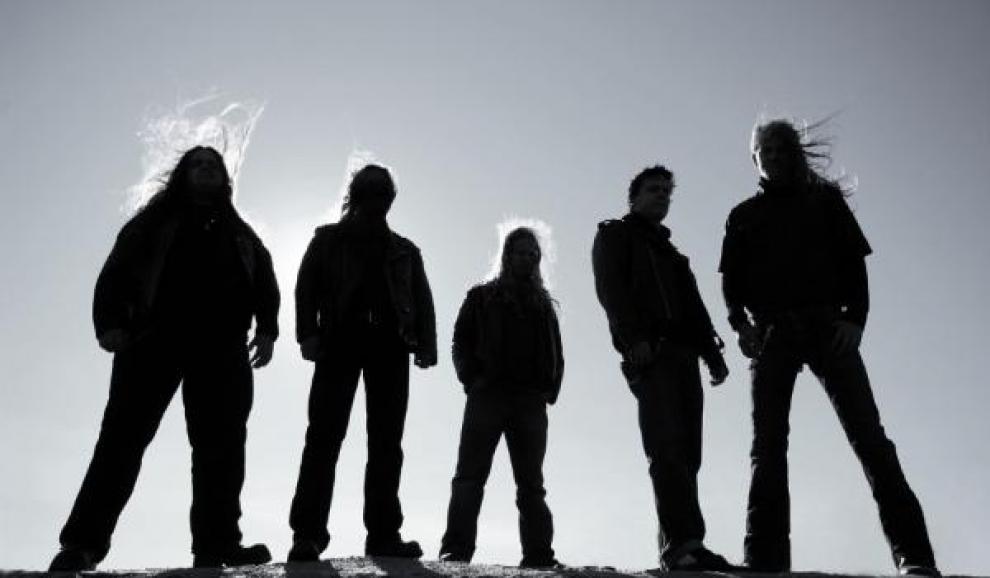
Welcome to the Moonsorrow Interviews Compilation!
Here you will find more than one hundred Moonsorrow interviews, many of which have already disappeared from where they were originally posted. Check the Index and Contact pages above and the notes in the left column for more info.

Wednesday, October 14, 2015

Metal Inside / December 2006


SOURCE

Interview:
2006-12-27 Moonsorrow

Band anzeigen


Auch wenn die Finnen MOONSORROW bisher stets fantastische Alben veröffentlicht haben, übertreffen sie sich mit ihrem neuen Werk "Viides Luku - Hävitetti" noch einmal selbst und präsentieren die neue Referenz des Viking / Pagan Metal - Genres. Mit diesem Oberhammer in der Hinterhand sitzen Sänger / Bassist Ville Sorvali und Drummer Marko Tarvonen ganz entspannt im ehrwürdigen "Ballroom" zu Hamburg und lassen allerlei kritische Fragen über sich ergehen… InterviewWieso seid Ihr denn mit dem neuen Album so schnell fertig geworden?


Ville: Schnell? Na ja, "Verisäkeet" wurde Anfang 2005 veröffentlicht, und das neue Album Anfang 2007. Wir sind in dieser Zeit nicht so viel getourt wie die meisten anderen Bands, daher hatten wir mehr Zeit, neue Songs zu schreiben. Erst jetzt kommen wir dazu, ein wenig zu touren, und wir hatten dieses Jahr erst unsere erste Europatour.


Warum erst so spät? Immerhin gibt es die Band bereits seit 1995.


Ville: Vielleicht liegt es daran, dass wir in der Vergangenheit so viele schlechte Angebote für Touren bekamen. Wir kennen sehr viele Bands aus der Helsinkier Szene und so weiter, und es ist so, dass wir sehr viel von ihnen gelernt haben. Diese Bands haben Fehler gemacht und setzen sich heute dafür ein, dass jüngere Bands diese Fehler nicht wiederholen.


Marko: Das stimmt! Wir lernen von den Alten!


Ville: Sie haben diese Touren durchgezogen, mussten alles selbst bezahlen und hatten üble Konditionen. Wir haben uns das zu Herzen genommen und entschieden, nicht so zu handeln. Es ist eine gute Szene, wir halten mehr oder weniger alle zusammen. Die Älteren geben den Jüngeren Ratschläge!


Marko: Das war für uns deswegen eine ganz klare Entscheidung.


Aber jetzt seid Ihr ja die Älteren!


Ville: Ich weiß es nicht, aber ich hoffe, dass es auch jüngere Bands gibt, die aus unseren Fehlern lernen und so was vermeiden.


Marko: Es soll sich aber nicht so anhören, dass jeder nur Fehler macht, weil auch wir gute Entscheidungen treffen, etc.. Das ist die andere Seite.


Auf Eurem wieder veröffentlichten Debüt "Suden Uni" sind acht Songs zu hören, auf "Voimasta Ja Kunniasta" und "Kivenkantaja" jeweils sechs Songs, auf "Verisäkeet" vier Stücke und auf "V:Hävitetty" nur zwei Stücke. Wird es dann auf dem nächsten Album nur noch einen Song geben? Ist das also ein Muster?


Ville: Nein, darin steckt kein Schema! Es ist einfach so passiert, dass das Album weniger Songs hat als die letzten. Wir verfolgen da echt keinen bestimmten Weg.


Ja, aber dann fragt man sich, wie bei Euch das Songwriting funktioniert. Jedes der zwei neuen Stücke könnte auch in mehrere Songs unterteilt werden.


Ville: Ja, aber es könnte auch nur ein einziger Song sein, haha!


Marko: Das Songwriting bei uns kann so aussehen, dass wir zuerst das Ende eines Stückes schreiben, nicht den Anfang. Beim ersten Song auf dem neuen Album etwa stand das Ende zuerst, und dann erst folgten die anderen Parts. Wir arbeiten nicht nach dem Schema, dass wir zuerst das Intro schreiben, dann die Verse, dann den Chorus… wir wollten mit der üblichen Songstruktur, wie es sie etwa in der Popmusik gibt, brechen.


Ville: Ja dieses "ABABABCAB" - Ding!


Marko: Sowas haben wir aber noch nie gemacht! Irgendwie sind diese neuen Stücke am Ende so lang heraus gekommen, aber das war nicht unsere Absicht. Wir wollten nicht bewusst so lange Songs haben. Unser Hauptsongwriter Henri (- Sorvali - Gitarrist und Keyboarder und nebenbei Ville´s Cousin) sagt immer: "Ein Song ist fertig, wenn er fertig ist!". Es gibt wirklich keinen expliziten Grund, warum die Stücke so lang sind.


Ville: Wir sagen das in jedem Interview, wenn wir danach gefragt werden. Wenn wir zum Beispiel acht Minuten an Material haben, aber denken, dass noch irgendetwas fehlt, dann schreiben wir einfach weiter. In diesem Fall hatten wir zwanzig Minuten, aber es fehlte immer noch was. Darum haben wir noch weiter gemacht, so lange, bis alles fertig war.


Das Problem dabei kann nur werden, dass die Stücke vielen Leuten einfach zu lang sind, das war etwa beim letztjährigen "Metal Bash" der Fall, nach dem Motto: "Ey, geile Band, aber viel zu lange Songs und so langweilig…!"


Ville: Hahaha! Dann ist es aber keine Musik für diese Leute, sorry!


Marko: Wir nehmen dieses Risiko gerne in Kauf, aber zuerst einmal machen wir diese Musik für uns selbst, nicht für die Fans. Natürlich schon für die Fans, aber erstmal müssen wir selbst zufrieden sein. Das bedeutet ja nicht, dass wir nicht an unsere Fans denken, aber wenn sie nicht bereit sind für 30 Minuten lange Songs, dann ist es deren Problem!


Ville: Dann müssen sie einfach andere Alben hören! Ich bin selbst etwas verärgert, wenn ich mir die typischen Musikhörer heutzutage anschaue; sie sind kaum noch in der Lage, sich für vier Minuten zu konzentrieren. Wir möchten die Leute, die die Welt für die einen längeren Moment loslassen können, gerne belohnen. Sei es für fünf Minuten, 20 Minuten oder eine Stunde. Es ist wie mit diesen Kaffeebechern aus Plastik, aus denen man trinkt und sie dann wegwirft. Genau diese Welt meinen wir!


Marko: Einmalprodukte, Fastfood! Sowas wollen wir nicht in unserer Musik haben, sondern dass sich die Hörer immer und immer wieder auf die Songs einlassen, seien es unsere älteren oder neueren Stücke.


Ville: Es ist für den Hörer auch viel aufregender, kein "Easy Listening" zu haben. Man muss unserer Musik Zeit geben, sie wieder und wieder hören, und jedes Mal wird man auf neue Themen aufmerksam, weil es einfach sehr viele Ebenen gibt.


Wie sieht es denn dann umgekehrt mit kommerziellen Aspekten aus?


Ville: Wir kennen dieses Wort überhaupt nicht, hahaha! Ich kann mich nicht daran erinnern, dass wir als Band jemals daran gedacht hätten, kommerziell zu werden.


Das Wort klingt erstmal scheiße, aber es geht ja im Endeffekt darum, dass Ihr Platten verkauft.


Ville: Ich bin wirklich glücklich damit, dass wir mit unserem kompromisslosen Stil, den wir schon immer hatten, dort hingekommen sind, wo wir jetzt stehen. Wir haben nie darauf geachtet, möglichst viele Platten zu verkaufen, sondern einfach nur unsere Musik gemacht. Trotz unserer zunehmenden Komplexität bin ich froh, dass es bisher so gut geklappt hat.


Marko: Wir sind auch sehr glücklich damit, dass unsere Plattenfirma versteht, was wir da tun und uns bei unserer Sache unterstützt und respektiert. Das klappt alles sehr gut.


Aber wie wollt Ihr diese Stücke live umsetzen?


Ville: Wir haben vor, sie live zu spielen, aber immer nur eins pro Gig, haha! Keine Ahnung, wir haben das bislang noch nicht versucht.


Marko: Einen Song von dem neuen Album müssen wir in Zukunft live spielen, aber wir werden ihn ein wenig kürzen. Es werden dann aber immer noch ca. 20 Minuten sein. Immerhin müssen wir auch noch die alten Songs spielen. Bei einem Gig haben wir 60 oder 70 Minuten, wenn es gut geht, und da müssen wir einfach Kompromisse machen. Normal bräuchten wir bei jeder Gelegenheit zwei Abende, an denen wir spielen; an einem Abend die neuen Stücke, am anderen die älteren. Aber wir sind leider noch keine so große Band, haha!


Wovon handeln die Stücke denn genau, also die Texte und die tiefere Bedeutung?


Ville: Hui, die tiefere Bedeutung… also ich schreibe die Texte… und das Album ist eher traurig, es handelt vom Untergang des Menschen und der Welt, also diesem Zeug. Wie detailliert soll ich denn werden?


Es hieß auch irgendwann mal, die Texte seien gegen Bush?!


Ville: Sie sind nicht gegen Bush, aber es gibt ein paar Andeutungen, die sich auf die heutige Welt übertragen lassen. An ein paar Stellen können die Leute es politisch sehen, wenn sie es so wollen.


Ihr habt auch gesagt, dass Englisch eine schöne Sprache sei. Wieso schreibt Ihr die Texte dann nicht in Englisch, damit sie mehr Leuten zugänglich sind?


Ville: Nun, ganz einfach, weil Finnisch eine noch viel schönere Sprache ist, hahaha! Auf Finnisch kann ich ausdrücken, was immer ich möchte und alles sagen. Was ich meine, kann ich auf Englisch natürlich schwerer umsetzen. Es wird aber englische Übersetzungen der Texte im Booklet geben, ich habe etwa einen Monat lang daran gearbeitet.


Auffällig ist auch, dass der erste Song von "V: Hävitetty" noch mal in zwei Teile aufgespalten wurde. Warum das?


Ville: Das war auch eine textliche Entscheidung. Es ist zwar immer noch derselbe Song, aber die Texte im Intro erzählen eine ganz andere Story als der Rest. Das Intro ist der skandinavischen Mythologie entliehen und der Entstehung der Welt. Der zweite Teil mündet in das Ende der Welt, und alles beginnt wieder von vorne. Dann muss man den Song wieder auf Anfang stellen…


Marko: … ja, weil er so geil ist, hahaha!


Ville: Wenn die alte Welt zu Ende ist, wird eine neue Welt entstehen. Das ist eher mythologischer Kram.


Die Texte und der Inhalt des Albums sind also sehr düster. Aber wenn man Euch so sieht, dann macht Ihr nicht den Eindruck, als seiet Ihr depressive Typen, sondern eher lustig drauf!


Ville: Haha, ja, sehr lustige Typen! Jeder Mensch auf der Welt hat eine positive und eine negative Seite. Es kann sein, dass uns die Musik dazu dient, die negativen Gefühle auszudrücken. Was mich betrifft, ich muss diese Gedanken nicht mehr in meinem normalen Alltag ausleben. Die ganzen schlechten Dinge kann ich durch die Musik transportieren.


Marko: Und dadurch können wir die Freuden des Lebens viel besser genießen.


Ville: In den nächsten Jahren kann ich mir auch nichts anderes vorstellen, als Musik zu machen!


Aber Eure Musik könnte auch "fröhlicher" werden, denn selbst die Viking Metal - Szene ist ja in zwei Lager gespalten: die eher "happy" aufspielenden Bands wie KORPIKLAANI oder FINNTROLL und die eher epischen, düsteren Vertreter wie Ihr, ENSLAVED oder die alten BATHORY…


Marko: Wir sind nicht lustig, nicht mal im Ansatz! Wir hatten ein paar dieser "fröhlichen" Parts in der Vergangenheit, aber wir bewegen uns davon weg. Dieser Folk Metal ist bei uns kaum noch vorhanden und auch auf dem neuen Album kaum noch zu hören. Ein paar dieser Melodien sind zwar noch vorhanden, aber sie stammen mehr aus der melancholischeren Folklore. Die finnische Folklore ist in zwei oder drei Arten unterteilt. Zum einen ist da der skandinavische Einfluss aus Schweden, Norwegen, etc. und zum anderen der Einfluss aus Russland und den slawischen Gebieten. Es ist ein Mix aus beidem, aber auf dem neuen Album verarbeiten wir eher diese… ich hasse das Wort "slawisch"…


Ville: Haha!


Marko:Ja, aber das trifft es am besten. Wahrscheinlich kommen unsere Folk - Melodien daher. Finnland war ganz früher geteilt, und wir gehörten zu verschiedenen anderen Ländern, wie Schweden oder davor Russland. Aber mittlerweile sind wir unabhängig, und diese musikalischen Einflüsse sind Schatten aus der Vergangenheit, haha!


Ville: Wenn Du über "fröhliche" Musik sprichst, dann musst Du auch bedenken, dass das eine nicht gerade gewöhnliche Sache war, als wir damals anfingen. Wir mochten es aber einfach, diese Folk - Melodien in unserer Musik zu haben. Nur ein paar Jahre, nachdem wir damit begonnen hatten, fingen zig Bands an, diese Musik zu spielen. Wir haben jetzt schon alles in dieser Richtung gehört und wollen nun etwas anderes machen. Ich sage ja gar nicht, dass wir durch unser Ding populärer geworden sind, ich sage nur, dass wir uns von der anderen Richtung wegbewegen möchten. Das wurde einfach zu langweilig!


Man kann auf dem Album sogar orchestrale Parts hören. Hattet Ihr denn ein Orchester zur Verfügung?!


Ville: Nein, wir haben ein Ein - Mann - Orchester!


Marko: Henri ist einfach sehr gut, was solche Orchestrierungen betrifft, auch Arrangements und alles mit dem Keyboard kann er hervorragend! Er hat ein eigenes Homestudio, in dem Ville und ich öfter vorbeischauen um zu hören, was er hat. Alles, was wir anderen ausarbeiten, geht durch seinen Filter, und er entscheidet, was am Ende in welcher Form genommen wird.


Ville: Wir haben nicht mal einen Rehearsal - Room. Er schreibt das meiste, und wenn er etwas hat, das seiner Meinung nach fertig ist, dann schickt er es uns per E-Mail. Wir hören es uns dann an und machen Verbesserungsvorschläge. Dann geht es so weiter.


Marko: Und alleine wegen Henri werden wir auch immer wieder mit FINNTROLL verglichen, weil er dort auch spielt. Das ist echt eine Sache, die ich nicht verstehe!! Definitiv nicht!!!


Hey, aber das wäre doch vielleicht eine Option für die Zukunft - ein Album, mit einem Orchester aufgenommen…


Ville und Marko: Nein, nein, nein, nein, nein, nein, nein, nein! So viel Geld haben wir nicht, und so was wollen wir auch gar nicht machen!


Ville: Wir sind in erster Linie eine Rockband und sehen die Dinge viel erdiger. Wir klingen vielleicht manchmal bombastisch, wir arbeiten auch darauf hin. Aber wir wollen bodenständig bleiben und möglichst viel ohne Orchester, etc. durchziehen.


Ihr seid ja auch nächstes Jahr für das "Wacken Open Air" bestätigt. Ward Ihr schon mal dort? Es ist immerhin das größte Metal - Festival der Welt…


Marko: Nee, noch nicht! Wir sollten schon seit vielen Jahren dort spielen, aber es hat nie geklappt. Ich weiß auch gar nicht, warum das so lange gedauert hat, aber sie haben ihre Gründe, wir haben unsere. Jetzt ist es aber endlich soweit!


Ville: Der Hauptgrund, warum es nicht eher geklappt hat, ist der, den wir schon vorhin besprochen haben. Wir haben aus den Fehlern anderer Bands gelernt, die dort ungünstige Konditionen hatten und alles selbst tragen mussten. Jetzt freuen wir uns aber, da auftreten zu können, und es wird sicher ein sehr cooler Event werden! Unser größtes Festival war bisher das "Party.San".


Marko: Es ist definitiv eine riesige Chance für uns!

Kronos Mortus / April 2008


SOURCE


Moonsorrow Interjú

Print Friendly
2008. ápr 25, 20:48 :
(scroll down for English Version)
A pogány ösztönökön és indulatokon kívül néhány remek banda is megszólalt a budapesti Paganfest-en április 14-én a Petőfi csarnokban. Én leginkább a finn Moonsorrow-t vártam, mert a zenéjük ellenállhatatlanul előhozza a közönségből a pogány szellemet, elszabadítva az ősi idők energiáit. Marko, a dobos beszélt nekünk egy kicsit az új lemezről, és elmesélte a legendát, amely a második album óta szövi át a zenét, és most az április 30-án megjelenő új EP-n teljesedik ki.
Honnan jött az ötlet, hogy egy mindössze két számból álló albumot készítetek?
Hát, eleinte nem terveztük, hogy csak két szám lesz. Igazából arra gondoltunk, hogy csinálunk hat vagy hét számot. De amikor elkezdtük az elsőt, már akkor hét-nyolc perces volt, amikor még valójában el se kezdődött, szóval elég hosszúra sikerült. Szóval az jutott eszünkbe, hogy bakker, ez így nagyon hosszú lesz, szóval csak egyszerűen így sikerült. Aztán gondolkoztunk azon is, hogy most akkor készítünk még néhány számot, vagy még egy félórásat. Aztán úgy voltunk vele, hogy basszus, csináljuk meg! Pedig ez egy elég őrült ötlet, nem túl gazdaságos, hogy úgy mondjam, de ennek ellenére ez a legjobban menő lemezünk eddig. Rádió verzió sem készült belőle, és mégis.
Nem meglepő, tényleg nagyon jó számok! Koncerteken is játsszátok őket?
A második számot játszottuk, persze egy kissé vágott változatot, ami úgy húsz perces. És megint csináltunk egy ilyet, az új EP-n is egy félórás szám található.
Ez a lemez még nem jelent meg, ha jól tudom, április 30-án jön ki. Beszélnél egy kicsit erről az EP-ről, a Tulimyrsky-ről?
Már jó ideje gondolkoztunk a Tulimyrsky koncepcióján, tehát, hogy készítünk egy nagyon agresszív, black metalos anyagot, visszatérve a gyökereinkhez, amikor a banda elindult. Aztán elkezdtük írni a számot, és mint a címe mutatja – ami ‘Firestorm’-ot (Tűzvihar) jelent -, tényleg nagyon agresszívnek indult. Ilyennek is akartuk. Aztán lassan átalakult egy folkosabb, progresszívebb darabbá. Összesen három részből áll, az első az agresszív, black metalos rész, ezt követik a progresszívebb, folkosabb részek.
A Moonsorrow hangzása egyértelműen sokkal keményebb, sötétebb, mint hogy egyszerű folk metalnak lehessen nevezni, de ragaszkodtok ehhez a jelleghez. Mit jelent számodra a folk zene?
Ez olyasmi, amit az ember gyerekkorában hall, a szüleitől, aztán meg a suliban. Ez olyan fajta zene, ami benned van, amíg meg nem halsz. Ezek a tradicionális dallamok mindig itt élnek benned. Habár mi nem használunk fel hagyományos elemeket, hanem ez a saját stílusunk.
Te hogyan ismerkedtél meg a népzenével?
A bandán belül mindannyiunkat érdekel a kereszténység előtti kor Finnországban és egész Skandináviában, érdeklődünk a finn mitológia iránt, az ősi hitvilág iránt, ami elég hasonló a viking és északi kultúrához. Amikor fiatalabbak voltunk, nagyon benne voltunk a történelemben meg ilyesmiben. Viszont én nem igazán hallgatok finn vagy skandináv népzenét.
Hanem mit hallgatsz?
Amit a leginkább hallgatok…a metalon kívül nagyon szeretem a brit progresszív rockot a ’70-es évekből, például a Pink Floyd-ot a Genesis-t, a King Crimson-t, és így tovább. De meg tudok hallgatni bármiféle zenét, kivéve a rap-et, azt nagyon utálom, az ilyen MTV zenéket. Gondolom ti is.
Hát nem vagyunk oda érte, hogy úgy mondjam. De ami a ti munkátokat illeti… hogyan építetek fel egy ilyen nem mindennapi művet, mint az új album? Úgy értem biztosan más, mint megírni egy szokásos, négy-öt perceset.
Igen, de nincs semmi titkos formula vagy recept (nevet). A lényeg az, hogy a fejedben legyen a zene, az az első, utána jönnek a dalszövegek. Henri akkor szereti megírni a szövegeket, ha a zene már teljesen elkészült. Persze már meg volt a szövegek témája, mielőtt elkezdtük volna írni a zenét, például a Tulimyrsky esetében az alapkoncepció a bosszúálló vikingek és északiak támadása. Ez a téma kötődik a második lemezünkhöz is, a történethez, a dalszöveg annak a folytatása. Persze ez az egész képzeletbeli, nem arról van szó, hogy tényleg le akarnánk rombolni Anglia és Írország partvidéki városait. De annak idején megtörtént, és erről szól. A rablásról, fosztogatásról, sőt a nők megerőszakolásáról is :), szóval tényleg nagyon brutális, agresszív, de ez volt a célunk, mivel ez így történt. Az északiak tényleg megtették ezt, és mi mindent bele akartunk vinni a zenébe, jó és rossz dolgokat egyaránt. És ahogy mondtam, ez kapcsolható a második album témájához. Két testvérről van szó, akik közül az egyik egy önző szemét, és elárulja a saját népét, most pedig a másik testvér megy, és bosszút áll, valami ilyesmi. A fordítás fel fog kerülni a website-ra amint hazajutottunk a turnéról. Ott megnézhetitek majd.
El tudod képzelni, hogy abban a korban élsz?
Talán nem… internet és fűtött házak nélkül… nem igazán.
Szóval ez inkább egyfajta nosztalgikus emlékezés azokra az időkre.
Ez igazából egy ideál. De persze a pogány hit – az nem csak egy ideál. Tényleg ebben élünk. Nagyon keresztény-ellenes, de semmi köze a politikához. Nagyon sok hülyeséggel megvádoltak ezen a turnén, különösen egyes német csoportok, azt állítják, hogy mi egy anti-együttes vagyunk meg ilyesmi, ami igazából hazugság. Kifordítják a dolgokat a weboldalunkon. De mi miatt? Érthetetlen. De már fent van a YouTube-on egy hivatalos közlemény, meg a saját oldalunkon is, a kiadó oldalán is meg mindenütt. Igazából arról van szó, hogy meg akarják akadályozni, hogy Berlinben fellépjünk. De nem hagyjuk magunkat.
Ezt örömmel hallom. Neked, mint dobosnak, milyen helyed, szereped van a bandában?
A bandát eredetileg Henri és Ville alapította, ahogy biztosan hallottad, és két demót készítettek. Én Henri haverja voltam, és mondtam nekik, hogy ha kapnak lemezszerződést, akkor szívesen dobolok, mert rossz volt hallani a dobgépet a demókon. Fél év múlva megkapták a szerződést, és felhívtak, hogy megvan a szerződés, irány a stúdió, ha még érdekel a dolog. Én meg mondtam, hogy naná, csapjunk bele! Én így lettem a Moonsorrow tagja. A többi srác, Markus és Mitja, egy évvel később csatlakozott, amikor elkezdünk koncertezni. Habár annak idején még nem sokszor léptünk fel, csak négyszer-ötször egy évben, és legalább öt-hat évig tartott, amíg eljutottunk az első igazi turnénkra.

Ha már itt tartunk, tudnál mesélni néhány koncertélményről? Milyen jó és rossz tapasztalataid voltak?
Szerintem megérte kivárni azt az öt-hat évet, mert addig nagyon rossz ajánlatokat kaptunk, például, hogy lépjünk fel előzenekarként nagyobb bandák előtt, de nem kaptunk volna semmit, és nekünk kellett volna fizetni a turnét. De ezeket elutasítottuk, mondtuk, hogy ez nekünk nem fog menni, otthon van munkánk, meg családunk… De most már keresünk valamennyit, főleg a fesztiválokon és… mi is volt a kérdés? :)
Pozítiv és negatív tapasztalatok.
Nyilván az első fellépés az olyasmi volt, amire egész életemben emlékezni fogok, és a két koncert Ororszországban, az nagyszerű volt. Aztán az első észak-amerikai koncertsorozat is, ezek mind nagyon emlékezetesek. Ami a legrosszabbat illeti…
Itt történt…?
Ja, igen majdnem elfelejtettem Pistát! :) Ր szervezte az első Finnországon kívüli fellépésünket. A Gothika IV volt az, ha jól emlékszem, 2004-ben. Ր hozott ide minket. Nagyon jó fej.
Hát nagyon köszönjük az interjút, nagyon jó volt!
Érezzétek jól magatokat!
——————————
ENGLISH VERSION:
Besides the heathen instincts and desires, some great bands also broke out on the Hungarian stage of Paganfest, Budapest, Petőfi Hall, April 14, 2008. For me, perhaps the most expected group was the Finnish Moonsorrow, whose music irresistibly digs deep into the pagan spirit of the audience, letting loose the powers of the ancient times. The drummer, Marko presented us the new album, and he also revealed the legend that grows from the second album and culminates in to new EP which is to appear on 30 April.
The new album, Viides Luku – Hävitetty (2007) is monumental not only musically, but structurally as well. From whence came the idea of making a full-length album of two songs?
Well, first it was not planned like to have just two tracks. Actually we were thinking about doing just five or six songs. But then when we started writing the first one, it was something like 7 or 8 minutes long before it started properly, so quite long. We were thinking like hell, it would be a very long song, and I guess it just turned out like that. And then we were thinking about should we do a couple of songs more or do another half an hour long one. And we were like, fuck, let’s do it! Of course, it’s a crazy concept, but we felt good doing that, because it’s such an uncommercial thing to do. And still, it’s our best selling album! We did it without any radio edit, and it’s still selling very well.
No surprise, they are really amazing! Do you play these songs on concerts as well?
We’ve played the second song, of course a little bit edited version, which is about 20 minutes long. And now we did it again, a half an hour song for the new EP, Tulimyrsky.
That album is not yet out, it is due on April 30 if I am correct. Could you characterize that song for us?
We had the idea for Tulimyrsky for many years, I mean to do a very aggressive, fast, black metallish song, sort of back to our roots, when the band started. And we started writing the song, and of course, when the title means ‘Firestorm’, it has to be very brutal and aggressive. We wanted it to be total destruction and stuff like that. Then it started to develop into this more folkish and more progressive piece. It’s divided in three parts. The first is the very aggressive, black metal one, and then comes the progressive, folkish part…
It is obvious that Moonsorrow has a more heavy, ominous sounding than to call it simply folk metal, yet you seem to stick to this aspect anyway. What does folk music mean to you?
Well, something that you get to hear when you’re a child, from your parents, and in the schools. It’s a kind of music that grows in you, until you die. It’s like always inside you, these traditional melodies. Although we don’t use many traditional melodies, we try to do our own style.
How did you get acquainted with the folk culture?
We have certain interest within the band for the pre-Christian age in Finland, in Scandinavia, towards the Finnish mythology, the ancient beliefs, which shares a lot in common with the Norwegian or Viking culture. And , of course, when we were younger, we were very interested in history and all that. But I personally don’t listen to Finnish or whatever Scandinavian folk music.
What do you listen to, then?
I listen to mostly…besides metal, I’m really into British progressive rock from the 70s: Pink Floyd, Genesis, King Crimson, stuff like that. But I can listen to any type of music, except rap or something, I really hate this kind of MTV stuff. It’s the same with you I guess.
Well, we’re not after it to say the least. But as to your own work… how to structure such an extraordinary musical piece like the tracks of the new album? I mean it is surely different from a usual 4-5 minute song.
Yeah, but there’s no secret formula or something, like a recipe, you know (laughs) You should have the music in your head, it comes first, and then the lyrics. Henri likes to write the lyrics when the song is fully written first. Of course we had an idea what the lyrics was about even before we started to write and for example on Tulimyrsky we did have this concept about Vikings and Norsemen, who are going to have their revenge. It is related to our second release, Voimasta Ja Kunniasta (2001) very much, to the story that happens on that album, the lyrics go back to that time. Obviously it’s just imaginary, we’re not saying that we’re going to, for instance, destroy the coastal cities of England or Ireland, it is all fictionary stuff anyway. But it happened like that, and it’s about that. So really like about pillaging, robbery, even raping women (laughs) yeah, it’s very brutal, very aggressive, we anted to be like that, because it happened as well. The Norsemen did that, so we wanted to include everything, good and bad things as well. And also there are the links, like I’ve said, these are linked to the second album’s tales. There are two brothers, one of them is a greedy bastard, and betrays his own folk, and now the other brother goes and has his revenge. Stuff like that. We’re gonna have the translations on our website as soon as we get home from the tour. So you can check it.
You seem to be fascinated with those heroic times. Could you imagine yourself living in that era?
Maybe not. Without internet.. and warm houses…Not really.
So it is rather a kind of nostalgy for this heroic past that you express?
It’s an image. Totally. Well, of course the old pagan beliefs – that’s not an image. That’s really the way we live. That’s very anti-Christian but it has nothing to do with politics. We’ve received so much bullshit during this tour, mainly from certain German groups, they claim that we are an anti-band and such, but it is based completely on lies. They’re making a kind of bullshit of our website. But on what bases? I can’t see it! We’ve made an official statement, it is on YouTube right now, and also on our website and on our record label website and that of the booking agent, everywhere. They’re even trying to cancel our show in Berlin. But we will fight them back. We will. Because it’s total bullshit.
I’m happy to hear that. Could you tell me what is you place in the band as drummer?
The band was formed by only Henri and Ville, you probably know, and they made two demos. I was a friend of Henri and I told him after the second demo that if you really got a record deal, I’ll be happy to do the drums for the album, because I really hated the demos with the drum machine. And half a year later they got the record deal and they called me, saying ‘Now we’ve got the deal, if you’re still interested let’s go to the studio.’ And I was like: ‘Fuck yeah, let’s do it!’ that’s how I became member of Moonsorrow. The other guys, Markus and Mitja, they joined one year later when we started to do shows. At that time we didn’t do many shows, only four or five in a year, and it took us five or six years until we went on our first tour.
But since then you’ve visited many countries. Could you count some tour experiences in brief? What positive and negative memories do you have?
I think it was worth waiting for all those five or six years, when we got very bad offers, like as supporters of some biggest bands, without getting any money and we would have to pay for the tour actually, but we turned these down, we said we could not do it, we had our works and families back home and everything. But now we are making a little money from the tours and mainly from the festivals, and…what was the question? (laughs)
Positive and negative experiences, for instance.
Of course the first gig was something I’ll remember all my life, and the two shows in Russia, it was a fantastic trip really, then of course the first North-American trip; these are good memories. The worst are…
From here…?
Yeah, of course, I almost forgot Pista (laughs) He organised our first-ever gig outside Finland. It was Gothica IV, as far as I can remember in 2004. He’s the guy who got us in the first place. A very cool guy.
Well, thank you for the interview, it was a pleasure.
Yeah, have a good time!
Készítette: Theowina, Darkfeelings
Web: http://www.moonsorrow.com/
Ezt a cikket eddig 702 alkalommal tekintették meg.

Power of Metal.dk / February 2015

Link

February 27th 2015, Joensuu, Finland. Interview by Haydee G.


TRANSCRIPTION

How is it going?

Pretty good. It's been a busy week or, how would I say, three weeks? We've been touring quite a lot. We're mostly recovering from last weekend. It was fun, but a lot of shows and a lot of travelling. But it's right to finally tour in Finland as well.

What about Marko, your drummer? I heard he got hurt doing martial arts or something. How is he doing?

He's still limping like an idiot, it looks stupid but he plays pretty well. It doesn't really affect his performance, it's just that we cannot do the fastest songs, he cannot do that kick drum thing very fast for a long time, but otherwise... yeah. Ville is sick today, he sounded like an old granny, with screechy voice, forty degrees of fever and so on.

That's why you're doing the interview.

Well, yes.

What can we expect from the show tonight? What are your expectations? I mean, you haven't been here [in Joensuu] since Ilosaarirock in 2003.

Yeah, it's amazing how long time it is. One in 10 years, and it seems like only 5 years passed. We are as enthusiastic as I hope the people are here as well. So we're gonna give our best show.

You've been touring so much, after this you'll be heading to Jyväskylä and after that you'll be going to lots of festivals abroad and of course Nummirock. Which of the coming events excites you the most?

I'm not lying if I say all of them, because I don't have any preferences, it's just that we get to play—for example, we have a couple of shows in Italy and they're both headlining shows, so of course they're exciting for us. And then the summer festivals always have a special atmosphere. Nummirock especially is a midsummer festival. Festivals in Finland are different from, let's say, German festivals.

How so?

There's something about Finnish summer and the nature and everything, when you finally get to play in such remote places like the Nummirock festival, which is in the middle of the woods, and so on. It has some special thing.

Will you be touring more after the last festival in June?

Actually will be just concentrating on recording the album, which will happen in August or something, so we're pretty busy with that. I don't think we're gonna tour that much before we release the album, and that's going to be either very late this year or early next year.

That's nice to hear, because I will ask you more about that. [laughs] By the way, how do you make the fake blood that you put on before the shows?

It depends, because usually we use real blood, but it gets bad after a certain period of time and you can't really use it unless you're playing in Watain, so then we use theatrical blood on tours. But in Finland, or if we're just a couple of days abroad, then we're just using real blood.

Wow.

It's much better actually, because the fake blood sticks in the pores of your skin and you look like a cancer patient after a couple of days. It's really horrible how people are looking on the tour, like they're terminally ill or something.

I was expecting you would give me some kind of recipe. [laughs]
Your lyrics are mostly in Finnish and when you're playing the crowd sings along. Which country do you think sings the most accurately outside of Finland?

Definitely Hungary.

Hungary?

Yes.

Wow.

Because there's a small link between Finnish and Hungarian languages, very small, very remote, but still they have been the most enthusiastic at learning Finnish. When we were there for the first couple of times we could hear so many people singing completely accurately all the lyrics. That was impressive.

What are some of your activities when you're not touring?

Well... living from the music is difficult and... I Never thought that we should live from the band or anything, because I have many other interests in life as well. I work as a cameraman and photographer, I do lives for all kinds of TV stuff. And then I have hobbies like sailing, I have a boat with a friend of mine, and I'm travelling quite a lot.

Do you still do the camera stuff for TV shows?

Yes, actually...

What TV shows?

Everything from the news to TV feature films and some commercials. And I also do commercial photography, when I can.

How have things changed since you signed with Century Media in terms like touring, making the current album and such?

You know... nothing has changed, because we still haven't released an album with them! We're still on the process of releasing the first album for Century Media, and then things might change, but we're waiting to get ready and they're waiting for us to be ready to release. We've met them, they're really nice people, and they seem to know pretty well what they are doing and how to work with this band. It's been very enjoyable to discuss with them.

Last year you released a boxed collection through Blood Music. It must have been so satisfying to know that your work from '95 to '08 is stored in one compilation, and it kind of re-introduces your beginnings to some people. How was that experience, and what was involved in making that happen?

I met the owner of the company about 4 years ago and he brought up the idea, we were just discussing something in a bar. I thought it was a crazy idea, that it wouldn't work, but he was very persistent. He had already done the Strapping Young Lad box, so he had an idea of how to work it. Then he approached the whole band, we started working on it, putting things together, seeing how it would go. It was a lot of work, it all took two yearsand a lot of involvement from the band and from him. Every single detail has been checked and redone, and it's a very particular way of working when you have to go through everything so many times, there are so many box sets, every layout is different, every set is different, millions of factors that have to be right. So we have a lot of respect for him.

Is it true that it's limited to only 100 copies?

No, there were about 400. There are 4 different sets, each 100, and one of them is 150. The "die hard" set is 150. It sold out pretty fast. I would never exp—

It sold out already?

Yeah, it sold out just... within a month or two the last copies were gone. There are still some few copies at some stores or eBay, but they are really expensive, so I don't know if they're ever gonna move.

Is it true that you've spent most of 2014 writing your new material, or do you think you'll be writing more?

We did and we ditched a lot of material. We had a lot of songs ready but it just didn't click. We thought that it wasn't perfect, we can do better, and we just ditched those songs and then started all over again. That was good, now the material is really good, it's gonna be a great album. We're all really satisfied with the material so far.

You mentioned that you don't want to do the same formula over and over again. Black metal, traditional Scandinavian music, progressive rock and nature: those elements will always be a part of your music. What are some new elements that will distinguish the new album?

Once again, there is a new kind of mix of those elements. It's hard to say how it's so different. The whole tonality of it is different. It sounds different compared to our last album, or any of them. But it's more like... There are so many elements. It's not as streamlined as the previous album, that was produced in the same kind of mood all through, but this time there are a lot of passages, there are a lot of metal parts and a lot of very black metal-ish parts. So I think it's going to be quite interesting for many people, actually.

[in the most unexcited voice possible] This sounds exciting, definitely.
I read that the new songs won't reach the usual epic lengths of the old songs. Is there any truth to this?

Depends on how you look at it. There are no 30-minute tracks, but mostly they are 15-minute tracks. It's not going to be any really short songs or anything. We're trying to have actually one shorter song also, because...

You're actually trying to make short songs now?

Yes, but we don't want to force it, it's stupid to try to force yourself.

Will you tell us if it's going to have any kind of cover, like on Tulimyrsky?

I don't think we will... We don't really like doing those, unless there's a perfect match that we really want to put out, but definitely not with the album. It will be some bonus.

Any estimation on when we can get our hands on the new album?

It's still in the talks. I would say very early 2016. It's possible to have it this year, but I'm not sure it's wise, because it needs a certain time for promotion, or preparing the cover art and everything, so it might be better to have it next year.

Your side band, Lakupaavi—how's that coming along now?

It's coming along all the time. It's stupid how many songs I, for example, have written during all these years. I have some 30 songs or something. Most of them I already have forgotten, or I really have to think to remember them, but there is some brilliant stuff. But we just never did it. Right now we are discussing that we should do it.

So you never had time since the last?

Or it just didn't feel right. The Lakupaavi album was done very spontaneously, it was just an outburst of whatever shit we were feeling and wanted to bring out. It should be done in the same way, or maybe in a totally different context. Maybe it won't be a Lakupaavi album, but something else. But I really wish to do it, because I have some really great songs.

Maybe different from Moonsorrow.

Yes, of course. It's this punk/grindcore stuff.

I read online that you're not drinking any more, well, you're drinking right now, but...

Who said that?

It must have been from an interview, I can't remember, that you don't drink any more... but you are drinking.

[looks at his beer can with sadness in his eyes] Yeah... I mean...

Who stopped drinking?

Nobody! (laughs) What the fuck is that?

Must have been a joke, then.

Yeah.

So, last question. Is there any message to our readers, your fans, out there? 

Yes, there definitely is, because we are really waiting for having the opportunity to tour again all over the world, so wherever you are, if we are coming near you, please come to say hello and come to the show.

Tuesday, October 13, 2015

Metalscript.net / August 2014


This interview was posted in August 2014; there's no better indicator for its date. This is supposed to be the first half, however I couldn't find the second one.

SOURCE


Митя Харвилахти (Moonsorrow): «Людям стоит внимательнее относиться к истории». Интервью


Metalscript.Net публикует эксклюзивное интервью с гитаристом-вокалистом известной финской viking metal-команды Moonsorrow Митей Харвилахти (Mitja Harvilahti), которое наши корреспонденты взяли на родине группы в Хельсинки. Знакомьтесь с первой частью этой интересной беседы.  - Влияет ли на твое творчество тот факт, что ты являешься гражданином Финляндии и чтишь ее историю?  - Всё это началось в дольно раннем возрасте, когда нам было около двадцати. Тогда мы обнаружили, что писать музыку о наследии своей страны очень интересно. Кроме того, мы поняли, что по-своему интересна культура каждой страны, все традиции, верования. Так у нас появились новые идеи для творчества. Я имею в виду, что, безусловно, мы слушали black metal и многие другие жанры, которые основываются на какой-то своей философии  или идее. Нет ничего удивительно в нашей симпатии к языческому мировоззрению, ведь в нем так много интересных аспектов, в том числе исторический. Всяческие легенды, верования - всё это стало для нас идеальным источником вдохновения.   - То, что вы исполняете музыку, которая базируется на финской народной традиции - это ваша принципиальная позиция гражданина или вам просто интересно?  - Конечно, это чрезвычайно важно. Многие люди ничего не знают о прошлом, о той культуре, которая процветала в их стране до  вытеснения её христианством. И всё же в той же России, где мы сейчас находимся,  и в других странах, где доминирует христианство или какая-то другая религия, старые верования существуют по-прежнему, однако в скрытом виде. Многие традиции, которые мы знаем, появились более 2000 лет назад, а мы до сих пор считаем их христианскими. Например, Рождество. Некогда его праздновали как что-то еще, а потом появились христиане, которым пришлось заменили старые традиции новыми. То есть для христиан лучшим выходом из положения было приурочить свои новые праздники к старым. Очень важно признать это. Людям стоит относиться к истории внимательнее.  - Многие финские музыканты начинают играть очень рано, еще в школе. Поэтому когда им исполняется уже 18-19 - они записывают альбомы хорошего качества, которые находят слушателя. Как это было у вас?  - Мне кажется, что родители каждого из нас относились к нашему творчеству с одобрением. Я и другие парни присоединились к группе, когда нам было по 19, Henri и Ville основали команду всего в 15… Кроме того,  родители многих из нас тоже музыканты. Например, мой отец, отец  Henri… Все мы с раннего детства, лет четырех-шести, учились в музыкальной школе. Поэтому у нас никогда и мысли не было, что наши родители не одобрят нашу игру. У нас очень прогрессивные родители. Поэтому запретов типа ты не можешь слушать то или это, это плохо и т. д. никогда не возникало.      - В Хельсинки в музыкальном магазине мы встретили мальчика лет девяти, который выбирал себе электрогитару вместе с папой. У нас такое встретишь не часто. Расскажи о вашем музыкальном образовании, у вас же в школах уже активно учат играть и рок-музыку?  - Музыкальное образование для детей у нас на очень высоком уровне. И обучение строится не только на классической музыке, но теперь уже все больше и на рок-музыке. Поэтому найти школу, где тебя научат классно играть на гитаре, не составит особого труда.  Меня не учили игре на электрогитаре, и много лет мне приходилось играть на классической, что мне не доставляло особого удовольствия.   - А вашим прогрессивным родителям нравилось-нравится то, что вы делаете?  - Не думаю, что им нравилось все, но отдельные моменты уж точно. Я думаю, что они гордятся тем, что я потратил все эти годы учебы игре на гитаре не впустую. То есть они отдали меня в колу, и это действительно мне пригодилось. Ведь с очень раннего возраста, лет 3-4-х, меня уже привлекали гитары и игра на них. Да, это как раз по мне!   - Во время прогулок по Хельсинки мы почти не встретили афиш, но я знаю, что концертная жизнь Финляндии очень насыщенная. В Беларуси она также становится очень активной и музыканты даже начинают жаловаться, что слушателей попросту нет, потому что все играют сами.  - Вокруг много метал-баров. У нас запрещено вешать плакаты на здания, но метал-концертов всегда проходит много. Все клубы работают. Например, даже в  четверг может быть четыре концерта. И конечно, бывают случаи, когда на все не хватает посетителей. Но в целом метал у нас очень популярен, он примерно на том же уровне, что и поп, и поп-рок. Если вы посмотрите на рейтинг топ-40 или даже топ-10, там всегда будут по крайней мере 3 метал-команды. У нас действительно много металхедов, это не просто стереотип.   - А репетеционные точки? Студии?  - Студии постоянно закрываются, потому что теперь люди имеют возможность записываться дома. Поэтому сложилась довольно сложная ситуация. Репетиционные точки найти непросто, и они стоят дорого. Сложно сказать, помогает ли группам государство. У нас есть дома для молодежи, где есть репетиционные точки, то есть молодым есть с чего начинать. Но ситуация могла бы быть лучше, ведь найти места для репетиций все же чрезвычайно трудно.  Например, в течение нескольких лет мы делили репетиционную с Turisas, и это обходилось в 600 евро в месяц. Не особо дешево. Я думаю, что цена зависит и от города. Наверно, за пределами Хельсинки цены пониже.  - А расскажи немного о финской природе, которая вас вдохновляет?  - Природа всегда была для меня священна. Если бы у меня была религия, то это бы и была природа. Я ухожу в леса и погружаюсь в раздумья. У нас много красивых мест, особенно на востоке и на севере, которые сохранились в их первозданном виде. Многие люди отправляются в походы по лесам. Если бы у меня был свой дом где-то, я бы хотел, чтобы он был окружен девственным лесом, а не какими-нибудь подстриженными деревьями. У моих родителей есть летний домик, который располгагается в национальном парке. Это своего рода святое место для меня.  - Вы записывались в лесу для создания атморсферы? Это был какой особенный языческий лес?  - Да, мы записывали вокал для последнего альбома в хижине. Нет, это не было какое-то особое место. Просто оно нам подходило. К тому же там было довольно красиво. Не было такого, что мы идем в какое-то специальное место. Эта хижина принадлежит нашему другу.  До нас там записывалось еще несколько команд, поэтому мы знали, что с звуком все будет в порядке. Записываться там было здорово, вдали от городской суеты и всего прочего.   - А как это вообще технически осуществить?  - Я думаю, если место имеет хорошую акустику, если у тебя есть необходимое оборудование, тогда да, многие вещи можно записать, особенно гитары. Вам понадобится своего рода будка, хорошие микрофоны, звуковая изоляция. Всего этого будет достаточно, чтобы записать музыку в каком-нибудь летнем домике, и вам не придется платить 500-700 евро в день. Это хорошее решение для записи гитары или других электроинструментов.         - Вы сделали ваши композиции более короткими по сравнению с 30-минутными треками. Почему?  - Мы не хотели, записывать альбом всего с двумя песнями. Не думаю, что эти песни по 15 минут подходят для радио, но все же этот вариант лучше, чем  получасовые композиции. Тем не менее, они не появятся в радиоэфире, и в этом нет ничего удивительного. Мы всегда обещаем друг другу, что в этот раз мы попытаемся сделать наши песни покороче.  Мы всегда так говорим, даже записав альбом из всего лишь двух песен. И я думаю, что 15-минутный формат – это как раз то, что нам подходит и на что мы будем ориентироваться и в будущем. И только если мы придем к чему-то совершенно новому, к новым песням, стилю,  тогда что-то может измениться и они могут стать короче. Других причин  я не вижу.   - А как происходит процесс создания композиции?  - Появляется какой-то рифф, начало первой части песни. Ты должен понимать, куда ты хочешь направиться. Так ты начинаешь конструировать песню. Так происходит с любой историей, драмой, чем угодно, ведь должна быть некая структура.  Если песня длится полчаса, то у нее тем более должна быть какая-то композиция. Этот процесс занимает много времени. Ты как бы все время должен быть на шаг впереди и понимать, как ты хочешь развить песню. И если в каких-то местах ты хочешь использовать гитарные риффы, тебе нужно заполнить промежутки и сделать так, чтобы все это звучало.   Мы много импровизируем. Обычно это происходит в домашней студии, но никогда во время выступления, потому что тогда для исполнения каждой песни потребовалось бы года два. И когда у нас готовы материалы, мы смотрим, как их лучше сочетать. Иногда на это уходить много времени, а иногда песня готова за пару дней.   - Мелодии вы придумываете сами или черпаете что-то из финского фольклора, например?  - В нашей музыке не так уж много традиционных мотивов. Она, скорее, рождается в голове людей. Конечно, мы могли бы использовать что-то народное в нашем творчестве, но это было бы не то, чего мы хотели. У нас есть одна песня, в основе которой лежит старинная русская мелодия, но вся другая музыка, которую мы исполняем, может принадлежать только нашему же авторству,  за исключением краденых песен. (Смеется.)   - Апокалипсис был одной из главных тем вашего последнего альбома. Когда и где, по-вашему, он наступит?  - Катаклизмы происходят постоянно, человек  уничтожает природу. Разрушается окружающая среда, вымирают виды. Люди уничтожают себя. Я имею в виду, что, когда из-за жадности мы калечим планету, мы уничтожаем и наше будущее. Я не знаю, когда это случится и в каком масштабе, но многие  последствия необратимы. Ведь мы не можем воскресить вымершие виды, вернуть леса, растения... И нам пора признать, что апокалипсис является своего рода символом того, что мы делаем сами с собой и с природой. Мне кажется, есть какие-то способы остановить это, но мы не хотим. Нам по душе жить в роскоши, разрушая все вокруг.Metalscript.Net публикует эксклюзивное интервью с гитаристом-вокалистом известной финской viking metal-команды Moonsorrow Митей Харвилахти (Mitja Harvilahti), которое наши корреспонденты взяли на родине группы в Хельсинки. Знакомьтесь с первой частью этой интересной беседы.
– Влияет ли на твое творчество тот факт, что ты являешься гражданином Финляндии и чтишь ее историю?
– Все это началось в дольно раннем возрасте, когда нам было около двадцати. Тогда мы обнаружили, что писать музыку о наследии своей страны очень интересно. Кроме того, мы поняли, что по-своему интересна культура каждой страны, все традиции, верования. Так у нас появились новые идеи для творчества. Я имею в виду, что, безусловно, мы слушали black metal и многие другие жанры, которые основываются на какой-то своей философии или идее. Нет ничего удивительно в нашей симпатии к языческому мировоззрению, ведь в нем так много интересных аспектов, в том числе исторический. Всяческие легенды, верования – всё это стало для нас идеальным источником вдохновения.
– То, что вы исполняете музыку, которая базируется на финской народной традиции – это ваша принципиальная позиция гражданина или вам просто интересно?
– Конечно, это чрезвычайно важно. Многие люди ничего не знают о прошлом, о той культуре, которая процветала в их стране до вытеснения её христианством. И всё же в той же России, где мы сейчас находимся, и в других странах, где доминирует христианство или какая-то другая религия, старые верования существуют по-прежнему, однако в скрытом виде. Многие традиции, которые мы знаем, появились более 2000 лет назад, а мы до сих пор считаем их христианскими. Например, Рождество. Некогда его праздновали как что-то еще, а потом появились христиане, которым пришлось заменили старые традиции новыми. То есть для христиан лучшим выходом из положения было приурочить свои новые праздники к старым. Очень важно признать это. Людям стоит относиться к истории внимательнее.
– Многие финские музыканты начинают играть очень рано, еще в школе. Поэтому когда им исполняется уже 18-19 – они записывают альбомы хорошего качества, которые находят слушателя. Как это было у вас?
– Мне кажется, что родители каждого из нас относились к нашему творчеству с одобрением. Я и другие парни присоединились к группе, когда нам было по 19, Henri и Ville основали команду всего в 15… Кроме того, родители многих из нас тоже музыканты. Например, мой отец, отец Henri… Все мы с раннего детства, лет четырех-шести, учились в музыкальной школе. Поэтому у нас никогда и мысли не было, что наши родители не одобрят нашу игру. У нас очень прогрессивные родители. Поэтому запретов типа ты не можешь слушать то или это, это плохо и т. д. никогда не возникало.
– В Хельсинки в музыкальном магазине мы встретили мальчика лет девяти, который выбирал себе электрогитару вместе с папой. У нас такое встретишь не часто. Расскажи о вашем музыкальном образовании, у вас же в школах уже активно учат играть и рок-музыку?
– Музыкальное образование для детей у нас на очень высоком уровне. И обучение строится не только на классической музыке, но теперь уже все больше и на рок-музыке. Поэтому найти школу, где тебя научат классно играть на гитаре, не составит особого труда. Меня не учили игре на электрогитаре, и много лет мне приходилось играть на классической, что мне не доставляло особого удовольствия.
– А вашим прогрессивным родителям нравилось-нравится то, что вы делаете?
– Не думаю, что им нравилось все, но отдельные моменты уж точно. Я думаю, что они гордятся тем, что я потратил все эти годы учебы игре на гитаре не впустую. То есть они отдали меня в школу, и это действительно мне пригодилось. Ведь с очень раннего возраста, лет 3-4-х, меня уже привлекали гитары и игра на них. Да, это как раз по мне!
– Во время прогулок по Хельсинки мы почти не встретили афиш, но я знаю, что концертная жизнь Финляндии очень насыщенная. В Беларуси она также становится очень активной и музыканты даже начинают жаловаться, что слушателей попросту нет, потому что все играют сами.
– Вокруг много метал-баров. У нас запрещено вешать плакаты на здания, но метал-концертов всегда проходит много. Все клубы работают. Например, даже в четверг может быть четыре концерта. И конечно, бывают случаи, когда на все не хватает посетителей. Но в целом метал у нас очень популярен, он примерно на том же уровне, что и поп, и поп-рок. Если вы посмотрите на рейтинг топ-40 или даже топ-10, там всегда будут по крайней мере 3 метал-команды. У нас действительно много металхедов, это не просто стереотип.
– А репетеционные точки? Студии?
– Студии постоянно закрываются, потому что теперь люди имеют возможность записываться дома. Поэтому сложилась довольно сложная ситуация. Репетиционные точки найти непросто, и они стоят дорого. Сложно сказать, помогает ли группам государство. У нас есть дома для молодежи, где есть репетиционные точки, то есть молодым есть с чего начинать. Но ситуация могла бы быть лучше, ведь найти места для репетиций все же чрезвычайно трудно.
Например, в течение нескольких лет мы делили репетиционную с Turisas, и это обходилось в 600 евро в месяц. Не особо дешево. Я думаю, что цена зависит и от города. Наверно, за пределами Хельсинки цены пониже.
– Расскажи немного о финской природе, которая вас вдохновляет?
– Природа всегда была для меня священна. Если бы у меня была религия, то это бы и была природа. Я ухожу в леса и погружаюсь в раздумья. У нас много красивых мест, особенно на востоке и на севере, которые сохранились в их первозданном виде. Многие люди отправляются в походы по лесам. Если бы у меня был свой дом где-то, я бы хотел, чтобы он был окружен девственным лесом, а не какими-нибудь подстриженными деревьями. У моих родителей есть летний домик, который располгагается в национальном парке. Это своего рода святое место для меня.
– Вы записывались в лесу для создания атморсферы? Это был какой особенный языческий лес?
– Да, мы записывали вокал для последнего альбома в хижине. Нет, это не было какое-то особое место. Просто оно нам подходило. К тому же там было довольно красиво. Не было такого, что мы идем в какое-то специальное место. Эта хижина принадлежит нашему другу. До нас там записывалось еще несколько команд, поэтому мы знали, что с звуком все будет в порядке. Записываться там было здорово, вдали от городской суеты и всего прочего.
– А как это технически осуществить?
– Я думаю, если место имеет хорошую акустику, если у тебя есть необходимое оборудование, тогда да, многие вещи можно записать, особенно гитары. Вам понадобится своего рода будка, хорошие микрофоны, звуковая изоляция. Всего этого будет достаточно, чтобы записать музыку в каком-нибудь летнем домике, и вам не придется платить 500-700 евро в день. Это хорошее решение для записи гитары или других электроинструментов.
– Вы сделали ваши композиции более короткими по сравнению с 30-минутными треками. Почему?
– Мы не хотели записывать альбом всего с двумя песнями. Не думаю, что эти песни по 15 минут подходят для радио, но все же этот вариант лучше, чем получасовые композиции. Тем не менее, они не появятся в радиоэфире, и в этом нет ничего удивительного. Мы всегда обещаем друг другу, что в этот раз мы попытаемся сделать наши песни покороче.
Мы всегда так говорим, даже записав альбом из всего лишь двух песен. И я думаю, что 15-минутный формат – это как раз то, что нам подходит и на что мы будем ориентироваться и в будущем. И только если мы придем к чему-то совершенно новому, к новым песням, стилю, тогда что-то может измениться и они могут стать короче. Других причин я не вижу.
– Как создаются композиции?
– Появляется какой-то рифф, начало первой части песни. Ты должен понимать, куда ты хочешь направиться. Так ты начинаешь конструировать песню. Так происходит с любой историей, драмой, чем угодно, ведь должна быть некая структура.
Если песня длится полчаса, то у нее тем более должна быть какая-то композиция. Этот процесс занимает много времени. Ты как бы все время должен быть на шаг впереди и понимать, как ты хочешь развить песню. И если в каких-то местах ты хочешь использовать гитарные риффы, тебе нужно заполнить промежутки и сделать так, чтобы все это звучало.
Мы много импровизируем. Обычно это происходит в домашней студии, но никогда во время выступления, потому что тогда для исполнения каждой песни потребовалось бы года два. И когда у нас готовы материалы, мы смотрим, как их лучше сочетать. Иногда на это уходить много времени, а иногда песня готова за пару дней.
– Мелодии вы придумываете сами или черпаете что-то из финского фольклора, например?
– В нашей музыке не так уж много традиционных мотивов. Она, скорее, рождается в голове людей. Конечно, мы могли бы использовать что-то народное в нашем творчестве, но это было бы не то, чего мы хотели. У нас есть одна песня, в основе которой лежит старинная русская мелодия, но вся другая музыка, которую мы исполняем, может принадлежать только нашему же авторству, за исключением краденых песен. (Смеется.)
– Апокалипсис был одной из главных тем вашего последнего альбома. Когда и где, по-вашему, он наступит?
– Катаклизмы происходят постоянно, человек уничтожает природу. Разрушается окружающая среда, вымирают виды. Люди уничтожают себя. Я имею в виду, что, когда из-за жадности мы калечим планету, мы уничтожаем и наше будущее. Я не знаю, когда это случится и в каком масштабе, но многие последствия необратимы. Ведь мы не можем воскресить вымершие виды, вернуть леса, растения… И нам пора признать, что апокалипсис является своего рода символом того, что мы делаем сами с собой и с природой. Мне кажется, есть какие-то способы остановить это, но мы не хотим. Нам по душе жить в роскоши, разрушая все вокруг.

Продолжение следует.

(It was never continued.)

MTV Iggy / February 2015

Link

Feb 19th 2015

Moonsorrow Goes Beyond Folk Metal, Talks Neopaganism

Moonsorrow Goes Beyond Folk Metal, Talks Neopaganism
Photo courtesy of the artist

"we have a very deep connection to nature, even when it's not mentioned in our lyrics. None of us are religious pagans, but there's a core of paganism and it is nature"

By MTV Iggy
March 16, 2015 

By Julia Neuman

Finland’s vast forests, plentiful lakes and icy winters bring forth some of heavy metal’s most powerful tales of paganism and nature. No band recounts these tales quite like Helsinki’s Moonsorrow. The quintet, founded by cousins Ville and Henri Sorvali in 1995, channels their admiration for the great outdoors into epic sagas sung all in Finnish. Their songs are chocked full of heathen spirit and intricate musicianship, sometimes running for as long as 30 minutes.
The band often gets lumped into the larger category of folk metal, but in reality, they’re forging their own legacy. When folk metal’s popularity exploded in the early 2000s, Moonsorrow didn’t waiver in their style to match the trends. We caught up with bassist and vocalist Ville Sorvali and guitarist Mitja Harvilahti in Bergen, Norway, just before their 2:00 AM set at Blastfest, where they talked about Finland, their unique role in the folk metal craze, and the direction of their new album due out later this year.

How did you first develop your deep connection with nature?

Mitja: We were born in Finland, so we still have that kind of connection within the country. It’s not very hard, even if we live in big cities, we still have a bond with nature. One part of Finnish culture is that almost every family has summer cottages. Either they own one or rent one.

When you started Moonsorrow, what else was going on in your lives and in Finland in terms of music?

Ville: With my cousin [Henri Sorvali], we had a lot of musical projects going on. He had some sort of recording equipment at his parents’ garage. We basically went there every weekend when we didn’t have school. We recorded whatever ­– and Moonsorrow was actually one of those “whatevers.” We decided we were gonna do something more with it.

M: Yeah, and a little bit later, when we were in our late teens and early 20s, there were already bands like Ensiferum, for example. Many of the bands like Finntroll were emerging as well. We were already connected with a lot of the bands who were already playing. And the Finnish metal scene hadn’t grown that much yet in the year 2000, so when we were releasing our first album, it was still going up and catching on with the bigger bands like Children of Bodom and Nightwish.

At what point did you decide you wanted to separate yourselves from the genre of folk metal or viking metal?

V: If I’m to be blunt, it was the point when they started doing the same thing in Germany. But that’s not the whole story. We basically got tired that the whole thing got so popular within its own circles. Suddenly everyone started making music that tried to sound like us, or Finntroll, or Ensiferum. No one was really bringing anything of their own anymore. So we decided – because we always made stuff that sounded like ourselves – that now it’s time to do something different because there are already bands that sound like us.

How do you want to be known in the context of heavy metal?

V: I would settle with doing something that people remember after we’re done with the band. It doesn’t matter how they remember it, but if they remember it when the band is gone, then we’ve done something we wanted to do. I wouldn’t want Moonsorrow to be remembered as “the band who made the 30-minute songs,” because we’re much more than that. [Laughs] It’s become a bit of a burden, actually, that we made those three half-hour songs. Now people are asking, “When are you making an album that has 60-minute songs?” We did that and it felt right in the moment but it wasn’t the only thing we did.

There are some neopagan movements happening in Finland. Do you see yourselves as a part of that?

M: As far as I know, we’ve been an inspiration to people. I can understand that because we have a very deep connection to nature, even when it’s not mentioned in our lyrics. None of us are religious pagans, but there’s a core of paganism and it is nature. To worship nature is to respect and take care of it and find the deity in nature itself. In that way, we are very pagan.

V: When it comes to the old gods, back then when people couldn’t explain what was going on, they came up with these gods. And I can understand it perfectly and I respect it, but I’m way too scientific to start thinking that whenever there’s thunder, Thor is up there throwing lightning bolts. [Laughs] Back in the day, it was their own explanation. There is no reason for people to believe in that anymore, but it’s a good symbol.

How does Finland embrace your kind of music?

M: Well it does. Finnish metal is an export and public image of Finnish culture. It became so popular that the metal bands are one very important part of Finnish image. There are stupid awards that are given to the bands, but…

V: Yeah there’s also the Finnish Grammy for the best metal act, and we were once even nominated, because it’s a PR stunt. They always nominate one band outside of the mainstream just to make themselves look more credible. Those bands never win anything.

M: But we don’t have to be nominated or credited. It’s not about them giving us some respect. We are doing what we do, if we tour abroad, people like it somewhere, then that’s it.

A lot of metal bands wear blood, but what does it symbolize to you? Why did you start using it?

M: We started it in 2001. We had a Bathory cover show.

V: We were thinking, what would Bathory have done if they did live shows? Then we came up with the blood. Yeah, now that I remember it, it’s nothing more mysterious. [Laughs] It’s actually a very important part of the preparation of the show, at least for me. I can be very tired before the show, nothing interests me — I have just enough power to go to the fridge to grab a beer for myself — but then when I start putting on the makeup, and especially when I splash the blood and it’s cold, it kind of wakes you up. Oh yeah, I’m here to play a show!

What are you doing for your new album at the moment?

M: We have about 70% of the album ready musically. The whole process of just composing it has already taken years, and we ditched everything at some point. Within a couple months now we put together most of it, so it doesn’t require so much anymore to finish the songs, and then we’ll start writing the lyrics and stuff. But our way of working is very different from other bands. We don’t rehearse at a rehearsal room.

What kinds of vibes are you getting from writing?

V: Norway. We have a lot of influences from a lot of places, but it comes up every now and then that we were all brought up music-wise during the ’90s with Norwegian music. You can probably hear that again on the new album. Enslaved was basically our main influence when we started the band.
M: But otherwise, it’s quite variable musically.

V: Yeah, there’s a lot of progressive rock. Just not so in-your-face that you would actually recognize bands like King Crimson or Yes, but there are a lot of hints in chord progressions.

What’s your drink of choice?

M: Hmm! Right now I feel like gin and tonic.

V: For me, it’s usually beer, but gin and tonic is healthier.

Guitar World / May 2009

Link

(Interview date: May 4th 2009)

PLEASE NOTE: The names seem to be messed up in this interview. It was Janne who had his guitar stolen, and it was Mitja who started liking the Beatles at the age of four. Therefore, I have decided to modify them, so they are correct in this blog entry.

----------------------------------------------------------------

Pagan Metal Roundup: Moonsorrow

When the popular Paganfest II tour rolled through New York last spring, featuring Korpiklaani, Moonsorrow, Blackguard, Swashbuckle and more, we caught up with Finnish pagan metal band Moonsorrow.
In the following Q&A, guitarists Janne Perttilä and Mitja Harvilahti discuss their pre-Christian beliefs, anti-nationalism and the future of pagan metal.
By Brad Angle. Main photos (and following gallery) by Sarah Sturges.

This is a paganfest tour. What the hell is pagan metal?

MITJA HARVILAHTI Well, I think pagan metal is just heavy metal with lyrics about spiritual themes, our ancestors and the pre-Christian beliefs in Finland.

JANNE PERTTILÄ And in Scandinavia in general. Things that tap into our heritage.

HARVILAHTI In Finland, it’s part of everyday life. These traditions are mixed in with the Christianity traditions and you have to seek a little bit further to understand why these traditions exist and the deeper meaning behind them. We’re not here to preach about it. We’re here to make people aware that they can see for themselves that their nation has its own history and traditions.

What specific aspect of pre-Christian beliefs interest you?

HARVILAHTI Nature. All of the old beliefs were tied in with nature. If you listen to our more recent albums, you can feel a sense of nature in the music. The lyrics are a bit more abstract, ranging from water to darkness and so on. The themes don’t always have to deal with Finnish traditions, but they should give you the feeling of being in Finland or the Finland/Scandinavia region.

So you guys are sort of tapping into these spiritual forces.

PERTTILÄ We do it for the sake of building an atmosphere, at least that’s what I personally believe.

HARVILAHTI We use it to show respect rather than to tap into one particular tradition or belief.

PERTTILÄ There are obviously fans of this scene who take it really far and actually living it out, like they’re trying to be Vikings or something. [laughs] Well, to each his own!

Do you have any wild fan stories?

HARVILAHTI I have a good one. We were in the U.S. a couple of years ago for Milwaukee Metal Fest and this guy comes over to me. I was wearing this rune and he asked me what it was. I began to explain it to him and he said, “Do you believe in Odin?” I told him no, that I was an atheist. He told me to fuck off and that I was not getting in to Valhalla! [laughs]

PERTTILÄ There are a lot of people that are surprised to find out we are just normal guys.

Moonsorrow's Janne PERTTILÄ. Photo: Sarah Sturges
What do you consider to be the roots of pagan metal?

HARVILAHTI
For me, it’s definitely Enslaved from Norway. I got introduced to them when I was 13 or something and they were definitely the most influential pagan black metal band during that time. Vikingligr Veldi, their first album, really opened my eyes to the use of pagan mythologies in the music. Plus, back then, even though there were some Norwegian bands that sung some songs in their own language, it was almost exclusively in English. But these guys sang the songs in Icelandic and gave me the idea to explore that in our music. We are not viking metal, but on our last EP, Tulimyrsky, we explored viking metal themes. It was just an EP and we wanted to do something fresh, but otherwise we are much more pagan metal than viking metal.

What made you first pick up a guitar?

PERTTILÄ The Beatles.

HARVILAHTI Yeah, same here. I was four years old when I first started listening to the Beatles. In all of those pictures where they’re holding their Rickenbackers, there’s just something really magical about those instruments. I’ve been obsessed with guitars ever since.

PERTTILÄ My parents had a few Beatles records from their youth in the Sixties. I got hooked on to their Sgt. Peppers LP, and the package was so nice. It blew my mind. When I was like seven or eight, I gradually bought all of the Beatles’ records with my allowance.

Did you guys take guitar lessons when you were younger?

PERTTILÄ I borrowed some self-learning materials from the library and played along to records. Then I eventually started to take proper lessons. At the same time, my parents made me take violin lessons for like eight years, and I absolutely hated it. [laughs] In hindsight, it was probably a good idea because I wouldn’t have learned all of the theory and musical knowledge at such a young age. Then when I hit puberty, I discovered punk rock, beer and women. [laughs]

HARVILAHTI I took classical guitar lessons for like 15 years, but I suck at it nowadays. I more or less learned how to play electric guitar by myself. Since I was nine, I’ve always been in some kind of band. I would start in one class, then move on to a new school and make new friends to start a band with, and so on. My earliest bands were black metal...but not when I was nine. [laughs]

What guitarist most influenced your style?

PERTTILÄ
Guys like Kerry King and Jeff Hanneman, [Dave] Mustaine, Dimebag Darrell, Alex Skolnick – whose solos are just godly – and Trey Azagthoth.

HARVILAHTI For me, I’d have to say [Spanish classical guitarist] Francisco Tárrega and his complete opposite: Jeff Hanneman. [laughs] I love how Hanneman can play the same lead in every song for so long. Plus Slayer have this punk attitude when they play. They are a perfect example of how you don’t always have to be always perfect in your technique and still be able to express your aggression through your guitar.

Do you bring that same mentality when you’re playing?

HARVILAHTI Not really. When I compose my guitar solos and such, as well as the other instruments, I always make it fit the music. I never do the Jeff Hanneman stuff in our music because it doesn’t fit. I take the existing parts of the song and write my leads to that, rather than writing leads just to have leads. They have to have meaning to the song. If I was playing more aggressive music, then I would go ahead and explore that realm.

One characteristic of pagan metal is its use of instruments that aren’t traditionally associated with extreme metal. What other instruments do you employ?

HARVILAHTI
In the studio, we use a lot of these old instruments, like the accordian and Jouhikko [traditional Finnish violin]. We stay very true to our roots so we never had any awkward situations with the hired musicians. A lot of folk metal or pagan metal bands these days can’t write good heavy metal music or good folk music. They should just concentrate on writing good heavy metal songs and if they want to add in some folk stuff, concentrate on writing good folk songs.

PERTTILÄ And it doesn’t help now that the scene exploded in Europe and it’s starting to happen here in the United States as well. All of these bands are coming out of nowhere, and some might have something, but most of them don’t.

What guitar technique/approach makes you stand out from the pack?

HARVILAHTI I’d have to say my Pete Townshend stage move and hanging my guitar lower. [laughs] That’s it. Well that, and a sense of melody.

PERTTILÄ I'd say the fact that we try to avoid harmonizing in the style of Iron Maiden, and do something with its own flavor.

What piece of gear is crucial to your sound?
 
HARVILAHTI My Gibson Flying V. I’ve been using it live for a few months and it’s the best live gear I’ve used. Buy it also depends on the situation. For amplifiers, I need an amp that has a straight-forward rock sound but with a bit more edge and a natural sounding EQ. I can tour with the effects easily. I plug straight into the PA, and through the head. That way if the head breaks, I am still on in the PA. As for my guitars, they are all Gibson. I have a collection of them, starting from ’79 to the modern ones. I mainly use the ’98 Natural Limited Edition, the Gothic, and, if I have the courage to bring it with me, the Silverburst from ’79.

PERTTILÄ I don’t have mine anymore. [laughs] I had a nice ESP custom shop star guitar that was stolen at the beginning of this tour in Montreal. The guitar I’m playing now is an ESP Eclipse, the standard model. For amps, I use a VHT rack unit with an ENGL preamp. Unfortunately, it’s hard to bring your own backline, so I would say that the most important thing is to be able to dial in a sufficient sound with whatever the gig gives you.

Pagan metal seem to have representatives in many different cultures: U.S., Finland, Ireland, Norway, among others. Is the scene filled with people that have strong national pride? 
 
HARVILAHTI Unfortunately, historically there are some countries, like Germany or Russia, that have destroyed pagan cultures and beliefs while employing pagan symbols to represent their views. I hate that. I hate it when people associate us and these symbols with the Nazi movement, or think we are right wing nationalists.

PERTTILÄ Of course, there are some good reasons for us to use these symbols, but it’s a touchy subject for some people. It’s hard for us to explain it without sounding like nationalist bigots. When you talk about pride, it’s not about thinking you are better than someone else or the self-righteous aspect of it.

HARVILAHTI And you have to keep in mind that there are pagans all over the world, in places like Siberia, the Amazon, Africa. It’s just recently that Europeans are rediscovering their pagan history. We came from these Christian backgrounds and are rediscovering our history after many generations of being away from it. We should be supporting these smaller nations who are struggling to keep their pagan culture alive after all these years.

What’s up with the costumes, chainmail and facepaint that many people and bands wear in the scene?

PERTTILÄ Well, it’s always funny to see people in hats with horns...and it always makes my day. [laughs] Living in today's culture, it’s always refreshing to see people dress out of the norm. It seems as if you include the word “heritage,” it makes the scene more “real” and attractive. It’s not something that I would do, but I can definitely understand it if you wear a costume to the party.

HARVILAHTI On our earlier albums, we dressed up like that for the pictures in the booklet. But not anymore. I have nothing against it, and I think people should have some fun once in a while.

This movement is just getting going here in the States. Where do you see it heading?

PERTTILÄ
Hell. We've played so many pagan metal festivals in Germany with so many sucky Finntroll copies that it’s unbelievable. Occassionally, some good bands pop up but I wish it wouldn’t escalate any further.

HARVILAHTI And if you look at the lineup for this tour and other similar shows, it’s always the same bands because there aren’t enough bands with potential, yet. The scene really needs some new blood and quality music. Otherwise, these same bands will tour for another 10 years.

PERTTILÄ You just can’t mix distorted guitar with an acoustic guitar or accordian and say you’re as good as Korpliklaani or Finntroll. It’s like the Sunset Strip in ’84—if you had big hair you would sell lots of records. [laughs]

Wednesday, September 23, 2015

Le Francofil' / December 2010

Link

Moonsorrow : le géant se remet en marche

Moonsorrow est sans aucun doute l’un des fers de lance de la musique métal finlandaise. Proposant une musique épique semblable à aucune autre pour son intensité et sa splendeur dramatique, le groupe était jusqu’à peu, bloqué dans le studio pour accoucher de leur sixième opus qui aura la lourde tâche de succéder au magistral Viides Luku. Nous avons rencontré, dans un bar du centre de Helsinki, Vile Sorvali, chanteur et bassiste du groupe afin qu’il nous révèle plus l’histoire et le fonctionnement de ce grand groupe.

Bonjour Vile, comme LeFrancofil’ est un journal d’information général, nos lecteurs ne sont peut-être pas familiers avec l’univers du Métal. Pourrais-tu présenter Moonsorrow à ces néophytes ?
Moonsorrow est un groupe de métal finlandais. Nous nous désignons nous mêmes comme faisant du métal païen. Nous avons cinq albums à notre actif et existons depuis 1995.

Un des points les plus remarquables de votre carrière est le fait que les membres du groupe n’ont pas changé depuis le tout premier album. Comment pourrais-tu expliquer cette singularité ?
Je n’en ai moi-même aucune idée, il doit y avoir une bonne alchimie entre nous, Il n’y a jamais eu aucun problème dans le groupe… je ne peux pas vraiment l’expliquer, c’est vraiment rare tu sais.

Comment se passe le processus d’écriture musical dans le groupe ? Moonsorrow est-il un groupe où tous ont la possibilité de s’exprimer ?

Normalement, cela se passe toujours de la même façon ; Henri, qui est notre claviériste écrit généralement la plupart des morceaux. Si quelqu’un vient avec une idée, il le fait savoir à Henri qui réalise alors une démo sur son ordinateur. Nous n’écrivons jamais vraiment rien dans la salle de répétition. Les morceaux prennent vie sur son ordinateur.

Vile, en tant que chanteur principal du groupe, tu es également en charge de l’écriture de la plupart des textes. Comment procèdes-tu exactement ?
Il peut m’arriver d’écrire quelque chose avant que les chansons ne prennent corps, juste quelques lignes qui me viennent à l’esprit, je peux toujours les écrire sur mon ordinateur afin de les sauvegarder. Néanmoins, j’écris toujours les paroles d’après les titres définitifs car je veux que celles-ci reflètent ce que la musique m’évoque. C’est également plus facile pour procéder à l´arrangement vocal des chansons.

Une autre singularité du groupe est le fait que toutes les chansons sont écrites en finnois. Cela a-t-il été une décision bien planifiée ? Penses-tu qu’il soit important d’utiliser ta langue maternelle pour t’exprimer artistiquement ?
Oui, je pense que j’en ai besoin pour m’exprimer proprement, et cela va parfaitement avec le groupe car tout ce que nous faisons est, quelque part finlandais ; ce ne serait pas la même chose si nous écrivions en anglais. Mais nous n’avons jamais eu de réunion pour décider de notre orientation artistique, nous avons un accord commun sur ce que nous faisons.

Pourrais-tu décrire le concept lyrique de Moonsorrow en une seule phrase ?
Dans un sens, je pourrais même le résumer en un seul mot : païen. Nous aimons exprimer notre nature païenne, la culture qui fut en Finlande avant l’arrivée du christianisme. Il reflète également une opposition aux valeurs modernes que nous avons aujourd’hui.

Ces dernières années, on a assisté à une croissance sans précédent des groupes de métal utilisant des paroles ou un concept inspiré des temps préchrétiens. Crois-tu que ce genre d’attitude ne diffère pas de la majorité des groupes de métal ou bien penses-tu que cela demande un engagement plus personnel ?
Question difficile. Je pense que la plupart des gens qui écrivent sur le sujet y croient. Il y a certainement aussi quelques individus qui agissent ainsi parce qu’ils suivent la mode ou je ne sais quelles autres raisons, mais je pense que le mouvement est quelque chose de positif. Cela peut rendre les gens conscients qu’il existait une culture avant la chrétienté ou même avant notre soi-disant société moderne. Peut-être que cela fera penser à plus de monde que la façon dont nous vivons aujourd’hui n’est peut-être pas la seule qui existe.

La plupart de ces groupes choisissent généralement, sans regards pour leur héritage culturel, de parler de la frange nordique du paganisme. Penses-tu qu’il serait plus convenable que ces groupes puisent dans la tradition qui leur est propre ?
Oui, totalement. Je veux dire, si un groupe français, par exemple, a envie d’écrire au sujet du paganisme nordique, pourquoi pas, mais il y avait également une culture païenne vivace en France. Alors ce genre de groupes devrait peut-être creuser plus profondément dans l’héritage culturel qui leur est propre…

Es-tu inspiré, dans ton écriture, par les épopées et autres récits préchrétiens ?
Certainement, mais le problème est qu’en Finlande, il n’existe aucun texte préchrétien car avant l’arrivée du christianisme, personne ici ne savait écrire, il n’existait donc que quelques éléments de savoir dispersés ici et là. Notre épopée nationale par exemple ne fut posé par écrit que quelque chose comme 700 ans après l’introduction du christianisme.

Quels sont les groupes qui vous ont le plus inspirés musicalement ?

Je dirais au début, des groupes comme Bathory et Enslaved mais nous aimons constamment intégrer de nouveaux éléments à notre musique et certaines influences sont apparues plus tard. Le groupe était très orienté black-métal à ses débuts mais il y avait encore beaucoup de choses à venir. Nous sommes également influencés par le folk et la musique progressive ainsi que bien d’autres choses. Je ne dirais pas qu’il existe une simple source d’inspiration pour notre musique.

Votre dernier album était très impressionnant; il ne comptait que deux morceaux pour une durée totale de 56 minutes ! Comment vous-est venue une telle idée ?
Je ne sais pas, c’est arrivé c’est tout…C’est une réponse ennuyeuse et peu informative mais…nous étions juste en train d’enregistrer le premier morceau de l’album et cela s’est juste développé à rallonge…et à la fin il totalisait trente minutes au compteur ! À ce point nous nous sommes dit, pourquoi ne pas écrire un second morceau du même acabit, pour tester nos limites…Nous n’avons jamais eu de plans préconçus, nous écrivons juste ce que nous ressentons.

Les paroles de cet album étaient particulièrement sombres, peut-ont s’attendre à quelque chose dans le même style pour votre nouvel album ?
Je dirais que cette fois-ci non plus il n’y a pas de lumière au bout du tunnel. Cela à pris une tournure encore plus sombre que je ne l’avais envisagé au premier chef.

Au niveau du format des chansons, avez-vous gardé cette tournure jusqu’au-boutiste ou bien êtes-vous revenus à écrire des chansons plus courtes ?
Tout ce que nous faisons est en quelque sorte sans compromis mais nous avons tout de même fait des chansons plus courtes que la dernière fois, elles ne dureront pas une demi-heure cette fois-ci. Elles restent longues pour tous les standards mais restent bien plus courtes que sur notre dernier album.
Pour ce qui est de l’inspiration pour faire de si longs titres… j’ai toujours aimé les groupes comme King Crimsom, ils écrivaient des épopées, leurs chansons étaient des histoires à elles seules, j’ai toujours aimé cette approche. Nous ne venons pas avec des titres aussi longs de manière intentionnelle mais nous avons beaucoup de choses à dire et en conséquence nos morceaux ont tendance à être extrêmement longs. J’aime penser que nous faisons de la musique pour ceux qui aiment la musique, pas seulement les chansons.

À part votre participation à la tournée européenne du Paganfest l’an prochain, aura-t-on la chance de vous croiser sur la route ? Et qu’en est-il de vos fans finlandais, auront-il aussi droit à quelques concerts ?

Oui, après le Paganfest nous ferons quelques concerts en Finlande, ils ne sont pas encore confirmés mais nous les ferons et quelques festivals estivaux bien évidement. Je n’ai aucune idée de ce qu’il se passera l’automne prochain mais je n’ai pas besoin d’avoir des certitudes si loin dans le temps.

J’ai pu, en faisant des recherches sur le groupe, trouver que tu avais fait partie d’un groupe appelé May Withers, peux-tu nous en dire plus sur ce groupe plutôt inconnu ?

Le projet existait avant que tout ne soit sur Internet. Nous avons juste enregistré une démo et ce fut tout. C’était chouette quand cela existait bien sûr…c’était une sorte de métal mélodique dans le veine d’Anathema, ce genre de choses. On appelait cela pop-métal même si ce n’était pas exactement pop.

Moonsorrow est un groupe de métal finnois, or la Finlande est un pays dans lequel le métal est considéré comme une musique populaire. Quels sont les avantages et les inconvénients d’une telle situation ?
Ah…je pense que l’on peut gagner de l’argent grâce à cette situation (rires), je blague, on ne se fait pas tant d’argent que ça en vérité. Cette situation est bonne pour les groupes bien sûr, ils ont plus d’opportunités pour faire des concerts et faire des albums de qualité avec des moyens conséquents et de se faire connaître.
Étant donné que le métal est en quelque sorte accepté par tous en Finlande, il attire des gens qui n’y auraient jamais eu contact et qui n’en connaissent pas vraiment la finalité. Le métal, comme le punk, est une musique de rébellion et maintenant qu’il est accepté par tous, il n’est plus vraiment rebelle… tout semble apparaître sous un jour différent aujourd’hui car on peut vraiment y gagner de l’argent. Je pense que c’est HIM qui fut l’un des premiers à populariser la musique métal en Finlande.

Que représente Moonsorrow pour toi ?
Une très grande part de ma vie. J’ai fait partie du groupe, si l’on veut être précis, la moitié de ma vie et c’est quelque chose dont je ne pourrais pas me débarrasser même si j’en avais envie. Je ne me suis jamais senti pareil dans aucun autre groupe, cela fait partie de ma vie au lieu de n’être “que” de la musique.

Musicalement, à part le métal, qu’écoutes-tu ?
Beaucoup de choses ! Je ne peux pas mettre mes goûts musicaux dans des cases. Aujourd’hui j’écoutais Madonna sur mon ordinateur par exemple.

Tu veux vraiment que j’écrive ça ?
(rires) Vas-y, ce n’est pas un secret. J’écoute différents styles de musique. J’étais également en train d’écouter Gojira durant la même heure. Cela peut en quelque sorte, représenter mes préférences musicales ; le style importe peu du moment que la musique est bonne.

Quels sont pour toi les meilleurs et pires groupes finlandais ?
Le dernier groupe finlandais qui a retenu mon attention a été Ghost Brigade. Je trouve qu’ils sont réellement impressionnants et ne sonnent comme aucun autre groupe. Beherit fut une grosse influence pour Moonsorrow. Amorphis, en tant qu’influence précoce fut très important… Swallow the Sun, nous avons tourné avec eux à quelques occasions, c’est vraiment un très bon groupe, ainsi qu’Insomnium dans le death métal mélodique.
The 69 Eyes, je ne les apprécie pas plus que ça, c’est le cas de beaucoup de gens, mais ils sont connus malgré tout. Ils faisaient de bons trucs au début mais ils ont changé leur style. Mais je ne déteste personne, je préfère trouver la face positive de chaque groupe. J’ai même fini par apprécier Korpiklaani (rires) ! Nous étions en tournée ensemble et j’ai du les écouter tous les soirs et j’ai finalement appris à comprendre leur musique.

Quelle a été ta dernière découverte musicale ?
Je n’ai fait aucune découverte aujourd’hui tout du moins. Mais j’aime essayer de faire le plus de découvertes que possible. Quelle était la dernière ? (Long silence…) Ha, subitement, je peux plus me souvenir…ha, oui ! Ma dernière découverte fut ce groupe de black métal finlandais, Raate.

Merci beaucoup pour cette interview Vile, je te laisse les derniers mots :
J’envoie mes salutations à tous les citoyens français qui se sont aventurés en dehors de leur pays et qui, pour d’étranges raisons, ont terminé ici. Bonne chance !
Le nouvel album de Moonsorrow devrait arriver dans les bacs de tous les bons disquaires vers la fin de l´hiver à travers le label Spikerarm. Soyez patients.
http://www.myspace.com/moonsorrow
http://www.paganfest.eu/news.html
http://www.spinefarm.fi/showband.php?id=36
http://www.moonsorrow.com/moonsorrowcom/moonsorrow.html
Propos recueillis par Lyonel Perabo